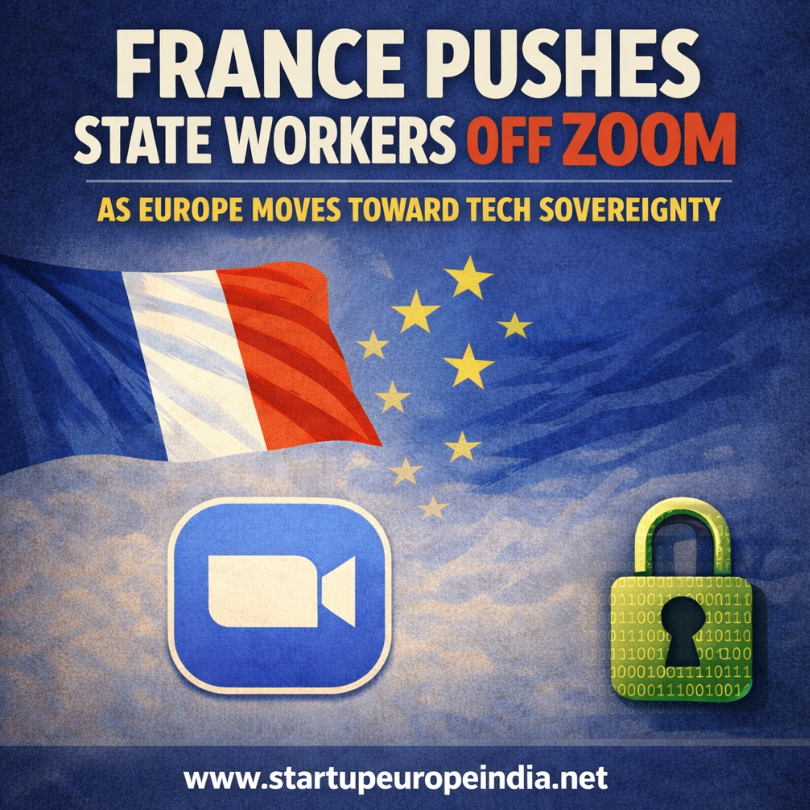
France has taken steps to reduce its reliance on foreign digital platforms by directing public sector employees to move away from services such as Zoom, a move that reflects broader European concerns about technological dependency on non-European technology providers. This strategic shift comes amid growing anxiety in Paris and Brussels about digital sovereignty, data security and geopolitical competition in technology infrastructure.
Reducing Dependence on Foreign Platforms
Under the new guidance, French government agencies and public institutions are being urged to avoid using Zoom and similar U.S.-based communication tools for official work involving sensitive information. The policy is part of a broader effort by the French government to encourage the adoption of European alternatives that adhere to stricter data protection frameworks and are hosted within EU jurisdictions, reducing exposure to foreign legal jurisdictions.
This shift should be seen in the context of expanding European ambitions to achieve greater technological autonomy in key areas such as cloud services, communication platforms, artificial intelligence and critical digital infrastructure. European policymakers have increasingly emphasised the importance of reducing dependency on U.S. tech giants a trend that has been accelerated by rising geopolitical tensions and strategic considerations about data sovereignty.
Strategic Concerns and Policy Drivers
The move is also aligned with discussions at the European Union level, where member states are evaluating strategies to boost domestic digital capabilities and support homegrown technology ecosystems. Officials are examining regulatory and industrial approaches to ensure that European institutions especially in the public sector leverage technology that aligns with EU privacy standards, security policies and critical infrastructure needs.
Europe’s push toward digital sovereignty includes efforts to foster indigenous technological ecosystems that can operate independently from dominant foreign providers, especially in communication, cloud computing, and enterprise software. These efforts are part of a broader industrial and innovation strategy to reduce strategic vulnerabilities in critical sectors.
Global Context and Wider Implications
While France’s directive specifically targets state usage of a commercial tool like Zoom, the underlying policy message reverberates across Europe: advanced economies are reassessing their digital infrastructure choices amid a rapidly evolving technology and security landscape.
The shift underscores that technology policy decisions are no longer driven solely by convenience or market share but are increasingly informed by sovereign risk, data governance, and strategic autonomy.
The emphasis on European alternatives also dovetails with initiatives such as efforts to develop EU-based cloud services and digital platforms that can compete with established global providers, as well as broader discussions on secure communication standards for public administrations.
Overall, France’s policy change though seemingly focused on a specific platform represents a broader strategic recalibration within Europe’s technology landscape as governments weigh the importance of digital self-reliance against traditional reliance on large global tech companies.
Join SEINET — the digital partnership ecosystem for tech businesses and leaders in EU-UK and India.
Start with a verified community, and unlock access to the exclusive Leaders Network for qualified founders and decision-makers. Build trusted partnerships and collaborate efficiently across markets www.startupeuropeindia.net
_<->1708724263995_9Y10OskXA8FdggLg.jpeg?w=3840&q=75)