Mon, May 18, 2026

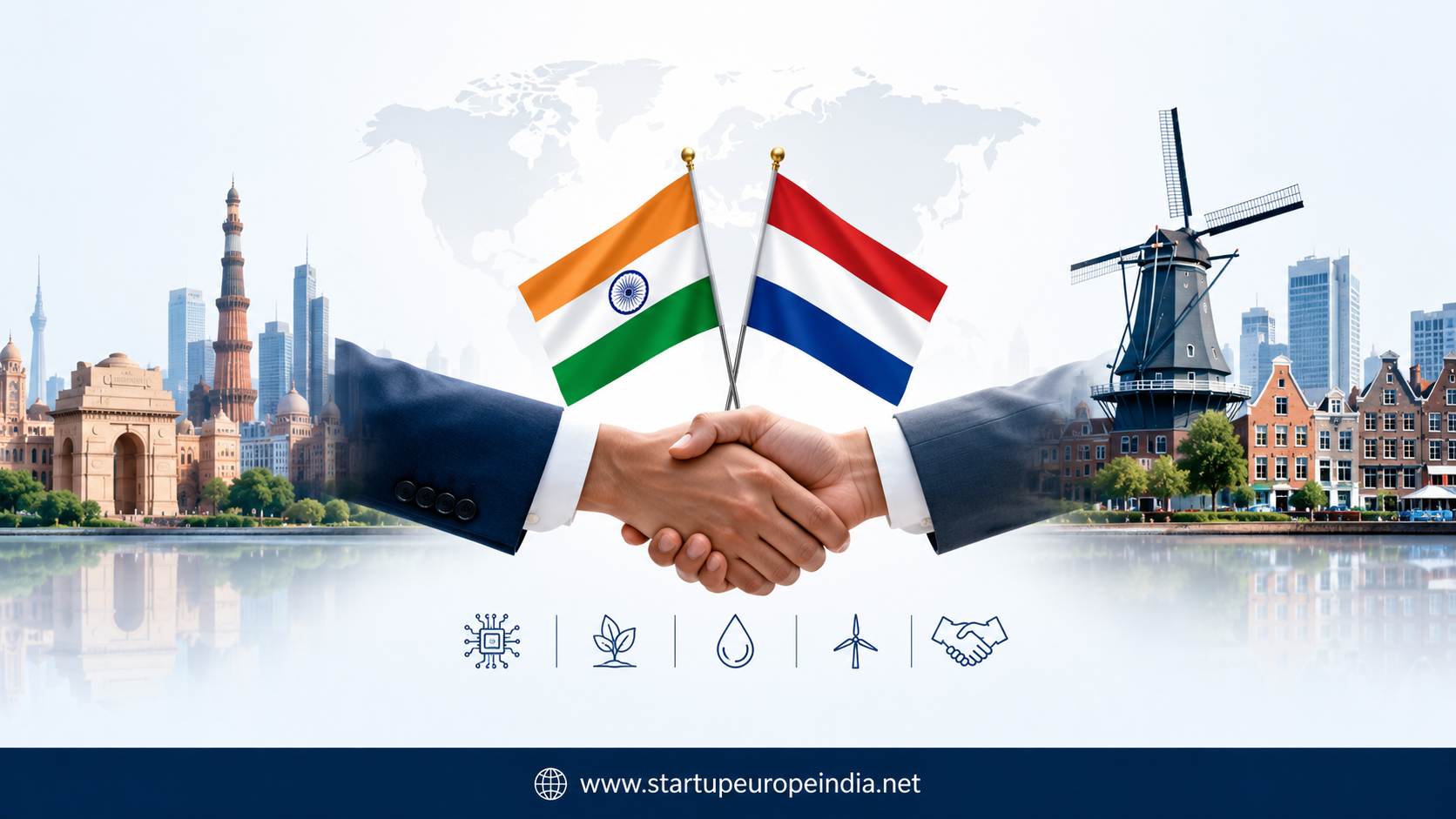
India and the Netherlands: 17 Agreements, One Strategic Partnership, and What It Actually Means for Technology
EU-India
Europe-India
Sarah   J

Sarah J

Posted on Mon, May 18, 2026

10 min read

Share the article with your network

x
Facebook
linkedin

The Hague, May 16-17, 2026

Prime Minister Narendra Modi visited the Netherlands on May 16-17, 2026, as the second stop on a five-nation tour covering the UAE, Netherlands, Sweden, Norway, and Italy (May 15-20). It was his second visit to the country.

Rob Jetten has been Prime Minister of the Netherlands since February 23, 2026, when he succeeded Dick Schoof after his centrist Democrats 66 party won snap elections in October 2025. Jetten is the Netherlands' youngest-ever Prime Minister.

On the morning of May 16, Modi was received by King Willem-Alexander and Queen Maxima at the Royal Palace Huis ten Bosch in The Hague for a bilateral meeting and luncheon. Modi and Jetten then held restricted and delegation-level talks, followed by dinner. On May 17, both Prime Ministers visited the Afsluitdijk, a 32-kilometre dam on the North Sea coast that protects large parts of the Netherlands from flooding while enabling freshwater storage, with a direct comparison drawn to India's proposed Kalpasar Project in Gujarat.

Ahead of the formal talks, Modi and Jetten met jointly with chief executives of major Dutch companies operating across energy, ports, agriculture, healthcare, trade, and technology. Modi invited Dutch firms to explore investment opportunities in India in maritime infrastructure, renewable energy, semiconductors, digital technologies, AI, and healthcare.

The visit produced 17 signed agreements and the adoption of the India-Netherlands Strategic Partnership Roadmap 2026-2030, the first time the two countries have elevated their bilateral relationship to the level of a formal Strategic Partnership.

THE ECONOMIC BASELINE

Bilateral trade between India and the Netherlands reached $27.8 billion in 2024-25. The Netherlands is India's fourth-largest foreign investor with cumulative FDI of $55.6 billion. The Netherlands also serves as a primary logistics gateway into Europe for Indian exporters through the Port of Rotterdam.

Both leaders underlined the importance of the India-EU Free Trade Agreement, whose negotiations concluded in January 2026, as a mechanism to deepen economic ties between the world's second and fourth-largest economies. The India-EU Security and Defence partnership was also simultaneously signed, covering maritime security, cyber, counterterrorism, and defence industrial collaboration.

TECHNOLOGY: THE CORE OF THE PARTNERSHIP

The technology agenda was the most substantive part of the visit and deserves more detail than most coverage provided.

  1. SEMICONDUCTORS AND EMERGING TECHNOLOGIES MoU

A Memorandum of Understanding on a Partnership on Semiconductors and Related Emerging Technologies was signed, providing the legal and policy framework for all semiconductor cooperation flowing from the visit.

The scope of the MoU goes beyond chip manufacturing. Building on this agreement, India and the Netherlands committed to jointly explore cooperation in artificial intelligence, photonics, quantum technologies, and cybersecurity, and to forge technology value-chain partnerships in both countries across these sectors. This is a significant addition to what would otherwise read as a chips-only deal. Photonics and quantum are not incidental references; they reflect the actual industrial strengths of the Dutch technology ecosystem, particularly through companies like ASML (lithography and optics), NXP Semiconductors (automotive and IoT chips), and the broader Eindhoven technology corridor.

  1. TATA ELECTRONICS AND ASML

The operational centerpiece of the semiconductor MoU is the deal between Tata Electronics and ASML, signed in the presence of both Prime Ministers.

ASML will supply DUV (Deep Ultraviolet) lithography tools, workforce training, and supply chain support for Tata's Dholera 300mm semiconductor fab in Gujarat. Process technology for the fab comes from Taiwan's Powerchip Semiconductor Manufacturing Corporation, covering nodes at 28nm, 40nm, 55nm, 90nm, and 110nm. At full capacity, the fab will produce 50,000 wafers per month, manufacturing power management ICs, display drivers, microcontrollers, and high-performance computing logic for automotive, mobile, AI, and communications markets.

The Dholera site was formally designated a Special Economic Zone in April 2026. Initial commercial production is scheduled for late 2026, with ASML tools being installed and calibrated through 2026. Total investment in the Dholera project is approximately $11 billion. Tata has already sent over 200 personnel to PSMC's Taiwan facilities for training.

ASML's most advanced EUV systems, used for sub-10nm production, are not in scope for this phase. The deal uses DUV tools appropriate for the 28nm to 110nm node range. This is the correct tool category for mature nodes and does not represent a gap in the agreement; it reflects what the production roadmap requires.

  1. DUTCH SEMICON COMPETENCE CENTRE AND INDIAN SEMICONDUCTOR MISSION

India and the Netherlands agreed to formally connect the Dutch Semicon Competence Centre to the Indian Semiconductor Mission (ISM). The purpose is to extend Dutch semiconductor ecosystem support to Indian industries, startups, scale-ups, SMEs, and their suppliers through collaboration, technology transfer, and talent development. The Indo-Dutch Semicon Online School, which has been running bilaterally, will continue into its next phase.

  1. SEMICONDUCTOR BRAIN BRIDGE: THE ACADEMIC-INDUSTRY CONSORTIUM

A Memorandum of Cooperation was adopted between two Dutch technical universities, Eindhoven University of Technology and the University of Twente, and six Indian institutions: IISc Bangalore, IIT Bombay, IIT Delhi, IIT Gandhinagar, IIT Guwahati, and IIT Madras. The initiative is backed by four companies: NXP Semiconductors, ASML, Tata Electronics, and CG Semi.

The stated purpose is a "brain bridge" in semiconductors and related technologies, combining academic R&D with direct industry participation from both sides. This is notable because it addresses the talent pipeline problem directly, rather than leaving it as a future aspiration. Eindhoven University of Technology sits in the heart of the Dutch semiconductor corridor and has deep existing ties with ASML and NXP; IISc and the named IITs are India's strongest technical research institutions.

  1. SCIENCE, TECHNOLOGY AND INNOVATION: JOINT WORKING GROUP

Both sides agreed to intensify collaboration through the existing Joint Working Group on Science, Technology and Innovation, specifically aligning national research priorities in energy materials, biomolecular and cell technologies, AI, and cybersecurity. The roadmap references almost fifty large joint research and innovation programs launched in prior years as the foundation for this next phase.

  1. SPACE COOPERATION

The roadmap explicitly includes space-based applications as a cooperation area, focused on using satellite data to address societal challenges including climate change, water management, food security, and air quality. This is a continuation of existing bilateral cooperation in the space sector rather than a new standalone agreement, but its inclusion in the five-year roadmap gives it a structured implementation frame.

CRITICAL MINERALS

A Memorandum of Understanding on Critical Minerals was signed, covering the full value chain: exploration, research and innovation, supply chain integration, ESG standards, and circularity. The context matters here. China controls the extraction and refining of over 15 critical minerals globally. The India-Netherlands partnership on critical minerals feeds directly into semiconductor supply chain resilience, since rare earths and specialty materials are inputs into chip manufacturing. This agreement should be read alongside the semiconductor MoU, not separately.

GREEN HYDROGEN AND ENERGY TRANSITION

The India-Netherlands Roadmap on the Development of Green Hydrogen was launched. This is a bilateral roadmap document, not just a policy statement. It covers production, usage, and export of green hydrogen, and includes the development of a green corridor between India and the Netherlands, which is the trade infrastructure for India to export green hydrogen to European markets.

A Joint Working Group on Renewable Energy was established under the existing bilateral MoU on Renewable Energy, covering solar, green hydrogen, storage, and investment in the sector.

The renewal of the Joint Statement of Intent on Capacity Building for Energy Transition between NITI Aayog and the Netherlands was confirmed.

The Netherlands formally joined the Global Biofuels Alliance, which India launched during its G20 Presidency in 2023.

In sustainable mobility, both sides agreed to cooperate on smart charging infrastructure, battery technology and system integration, standardisation, heavy and medium-heavy zero-emission vehicles, smart urban mobility systems, and alternative fuels.

DEFENCE AND SECURITY

A Letter of Intent on Defence Cooperation was signed, covering structured joint tri-services interaction between the Directorates of International Military Cooperation of both countries, coordinating bilateral military engagement including between defence industries and research centres. Both sides agreed to explore a Defence Industrial Roadmap covering co-development, technology transfer, and joint ventures for co-production of defence equipment, systems, and components.

A Letter of Intent on Cyberspace Collaboration was signed, covering closer coordination in multilateral forums and joint efforts on countering cyber threats and cybercrime through capacity building and knowledge exchange. The 8th session of the Indo-Dutch online cyber school was noted as an ongoing mechanism under this framework.

On counterterrorism, Jetten explicitly condemned the April 2025 Pahalgam attack in which 26 people were killed, extended the Netherlands' solidarity with India in its fight against cross-border terrorism, and supported India's push for a UN Comprehensive Convention on International Terrorism. Both sides called for concerted action against groups proscribed under UN Security Council 1267 Sanctions Committee designations.

WATER MANAGEMENT

A Centre of Excellence on Water was established at IIT Delhi under the Ministry of Jal Shakti, in collaboration with the Netherlands' Ministry of Infrastructure and Water Management. Both leaders agreed to deepen cooperation on the Kalpasar Project in Gujarat, where Dutch technical and engineering expertise will be deployed. The Afsluitdijk visit on May 17 was framed around this parallel explicitly.

Joint programs under the Strategic Partnership on Water are already active in Uttar Pradesh, Maharashtra, West Bengal, Tamil Nadu, and Kerala, including within the Namami Gange Mission.

MARITIME

A renewed Memorandum of Understanding on Maritime Cooperation was noted. Both sides agreed to work toward a Strategic Roadmap on a Green and Digital Sea Corridor between India and the Netherlands, building on a Letter of Intent signed in October 2025. The corridor is intended to be environmentally sustainable, digitally integrated, and economically efficient. This maritime corridor is also the physical infrastructure through which India's green hydrogen exports to Europe would eventually flow.

The Netherlands also announced its decision to join India's Indo-Pacific Oceans Initiative (IPOI) and co-lead the Capacity Building and Resource Sharing pillar with Germany and the European Union.

HIGHER EDUCATION

A Memorandum of Understanding on Higher Education was signed between India's Ministry of Education and the Netherlands' Ministry of Education, Culture and Science.

A Memorandum of Understanding was signed between the University of Groningen and 19 Indian Institutes of Technology.

A PhD Fellowship Programme on Hydrogen was established between India's Department of Science and Technology and the University of Groningen, directly connecting academic research to the green hydrogen agenda.

HEALTH

The Memorandum of Understanding on Healthcare and Public Health was renewed. A Letter of Intent was signed between the Dutch National Institute for Public Health (RIVM) and the Indian Council of Medical Research (ICMR), covering infectious diseases, vector-borne diseases, One Health, and disease surveillance. Enhanced cooperation in pharmaceuticals and medical devices was confirmed under a MoU signed in June 2025, with the first Joint Working Group meeting to be held in 2026.

AGRICULTURE AND FOOD SAFETY

A Joint Declaration was signed between India's Ministry of Fisheries, Animal Husbandry and Dairying and the Netherlands' Ministry of Agriculture, Fisheries, Food Security and Nature. An Indo-Dutch Centre of Excellence on Training in Dairy was established at the Centre of Excellence for Animal Husbandry in Bengaluru. A Memorandum of Understanding was signed between Naktuinbouw and India's National Horticulture Board for India's Clean Plant Programme. A Memorandum of Understanding was signed between the Netherlands Food and Consumer Product Safety Authority (NVWA) and India's Food Safety and Standards Authority of India (FSSAI).

TRADE AND CUSTOMS

An Agreement on Mutual Administrative Assistance in Customs Matters was signed, enabling information exchange between customs authorities to strengthen enforcement and facilitate trade. The India-Netherlands Joint Trade and Investment Committee (JTIC) and bilateral Fast Track Mechanism for investments were confirmed as ongoing coordination tools.

MIGRATION AND MOBILITY

A Memorandum of Understanding on Migration and Mobility was signed, covering fair movement of highly skilled professionals, transparent visa processes, prevention of irregular migration, and anti-trafficking cooperation.

CULTURE

A Memorandum of Understanding was signed between the National Maritime Museum of Amsterdam and India's Ministry of Ports, Shipping and Waterways for cooperation in developing the National Maritime Heritage Complex in Lothal, Gujarat. The Chola Era Copper Plates, 11th-century artifacts held at Leiden University, were formally repatriated to India during a ceremony on May 16.

GOVERNANCE OF THE PARTNERSHIP

The Strategic Partnership Roadmap 2026-2030 establishes a Foreign Ministers' mechanism that will hold annual meetings to review progress across all 17 agreements and give strategic direction. This accountability structure, combined with the existing JTIC and Fast Track Mechanism for investments, means there are at least three institutional review layers built into the framework. Roadmaps without review mechanisms tend to become shelf documents; the annual Foreign Ministers' layer is the critical difference here.

WHAT WAS MISSING FROM MOST COVERAGE

Most reporting focused on ASML and the semiconductor deal. Three things that received insufficient attention:

First, the photonics and quantum expansion in the semiconductor MoU. The agreement is not limited to chip manufacturing. AI, photonics, quantum technologies, and cybersecurity are explicitly named as cooperation sectors under the same MoU. NXP Semiconductors, which is a significant Dutch company with deep automotive and IoT chip expertise, is part of the academic consortium but received almost no coverage.

Second, the Critical Minerals MoU is directly connected to semiconductor supply chain resilience and to the green hydrogen agenda, since electrolysers and fuel cells also depend on specialty materials. Treating it as a standalone trade deal misses the systems logic.

Third, the Green and Digital Sea Corridor is both a maritime cooperation project and the physical infrastructure that makes India's green hydrogen export ambitions to Europe operationally credible. The hydrogen roadmap and the maritime corridor are the same initiative viewed from two angles.


Join Startup Eirope India Netowork - Scaling innovation and talent, advisors, and partners across Europe, the UK, and India www.startupeuropeindia.net

You may also like

Sarah   J

Sarah J

Mon, May 18, 2026

PM Modi in Gothenburg: India and Sweden's Strategic Partnership, May 17, 2026
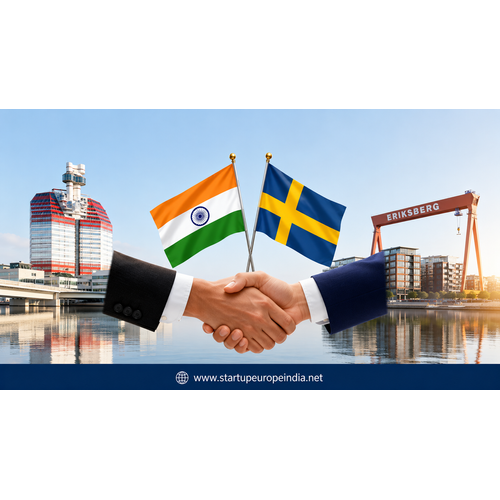
Prime Minister Narendra Modi visited Gothenburg, Sweden on May 17, 2026, as the third stop of his five-nation European tour covering the UAE, Netherlands, Sweden, Norway, and Italy. It was his first visit to Sweden since 2018, when he attended the inaugural India-Nordic Summit.Swedish Gripen fighter jets escorted Modi's aircraft as it entered Swedish airspace. Prime Minister Ulf Kristersson received him personally at Gothenburg Airport. Crown Princess Victoria of Sweden joined the bilateral meeting and conveyed the wishes of King Carl XVI Gustaf and Queen Silvia. Swedish Deputy Prime Minister Ebba Busch was also present.Gothenburg was chosen deliberately. It is Sweden's second-largest city and the country's industrial and manufacturing heartland, home to Volvo Group, which hosted the evening's European Round Table for Industry CEO session. Holding a diplomatic summit in a manufacturing city rather than the capital carried an implicit message about where both governments want the partnership to operate.Modi was conferred Sweden's Royal Order of the Polar Star Commander Grand Cross, the highest honour Sweden awards a foreign head of government. It was his 31st international honour from a foreign country. He was also presented with a symbolic gift: a box containing faithful reproductions of two handwritten cards by Rabindranath Tagore, India's Nobel laureate poet, chosen to reflect the historical depth of India-Sweden ties.THE HEADLINE OUTCOME: STRATEGIC PARTNERSHIPIndia and Sweden elevated their bilateral relationship to a Strategic Partnership, adopting the India-Sweden Joint Action Plan 2026-2030 as the implementation framework.The partnership rests on four named pillars drawn directly from the official joint statement: Strategic Dialogue for Stability and Security; Next-Generation Economic Partnership; Emerging Technologies and Trusted Connectivity; and Shaping Tomorrow Together, covering people, planet, health, and resilience.Both sides committed to doubling bilateral trade and investment within five years through the "Make in India" and "Made with Sweden" initiatives. Bilateral trade stood at $7.75 billion in 2025. A bilateral summit titled "India-Sweden: Stronger Together - towards 2047" was agreed to be held in India in 2027, anchoring the five-year roadmap at heads-of-government level.Kristersson reiterated Sweden's support for India's permanent membership of a reformed and expanded UN Security Council.TECHNOLOGY: THE FULL PICTURESWEDEN-INDIA TECHNOLOGY AND ARTIFICIAL INTELLIGENCE CORRIDOR (SITAC)The Sweden-India Technology and Artificial Intelligence Corridor, named SITAC in the official joint statement, was formally agreed. Its scope covers AI, digital transformation, innovation, and advanced technology partnerships involving industry, startups, and research institutions from both countries.The Swedish Deputy Prime Minister Ebba Busch attended the AI Impact Summit in New Delhi in February 2026 with a large delegation from the Swedish AI ecosystem. The joint statement records that Modi expressed appreciation for Sweden's participation. SITAC emerges directly from that engagement and gives it a bilateral institutional name and framework.JOINT INNOVATION PARTNERSHIP 2.0 AND THE INDIA-SWEDEN JOINT SCIENCE AND TECHNOLOGY CENTREThe Joint Innovation Partnership 2.0 was launched, upgrading the existing bilateral innovation framework. It establishes a virtual India-Sweden Joint Science and Technology Centre (ISJSTC) to connect academic institutions from both countries and facilitate joint R&D.The named technology domains in the partnership are artificial intelligence, 6G, quantum computing, critical minerals, renewable energy, and smart grid technologies. The 6G inclusion is directly relevant to Ericsson, which is headquartered in Sweden and was present at the European Round Table alongside Nokia, Vodafone, and Orange. Any India-Sweden 6G cooperation framework draws Ericsson into its scope commercially, even without naming the company in the agreement.SPACE: ISRO AND THE VENUS ORBITER MISSIONThe most operationally specific deliverable of the entire visit was the MoU between ISRO and the Swedish Institute of Space Physics on the Indian Venus Orbiter Mission, formally named Shukrayaan.The instrument Sweden will contribute is the Venusian Neutrals Analyzer (VNA), which will study how charged particles from the Sun interact with Venus's atmosphere and exosphere. The VNA is the ninth generation of the Swedish Institute of Space Physics's series of miniaturised ion and ENA (Energetic Neutral Atoms) instruments. The first generation, named SARA (Sub-keV Atom Reflecting Analyzer), flew on ISRO's Chandrayaan-1 in 2008-2009, making that the original basis of the ISRO-IRF collaboration. Sweden's Ambassador to India confirmed in September 2024 that ISRO and the Swedish Space Corporation were already working together on the mission; the Gothenburg MoU formalises that on official bilateral footing.Shukrayaan's key dates: the Indian government formally approved the mission in September 2024. The launch is scheduled for March 29, 2028 from Sriharikota on a GSLV rocket, with a 112-day journey and orbital insertion around Venus on July 19, 2028. The preliminary design report for the spacecraft was completed in April 2026. The 100kg science payload includes 16 Indian instruments, 2 collaborative instruments, and an international payload. Sweden's VNA is among the confirmed international contributions.Both leaders also agreed to pursue enhanced cooperation on space and geospatial technologies more broadly, noting India's role as a leading space nation and the role of Sweden's Esrange Space Center in Kiruna. Esrange is the northernmost satellite launch and space testing facility in Europe, capable of polar orbit launches and high-altitude balloon experiments, and one of a small number of facilities globally that can conduct certain types of re-entry testing.Kristersson said at the joint press conference: "Sweden is proud to be on our way to Venus together with India. ISRO and Sweden's national space agency have joined forces since the 1980s."LEAD-IT 3.0Both Prime Ministers welcomed the expansion of the Leadership Group for Industry Transition (LeadIT) and called for a new four-year phase, LeadIT 3.0, to be announced at COP31. LeadIT is a Sweden-India co-chaired global initiative focused on accelerating the transition of heavy industry toward net-zero emissions. The India-Sweden Industry Transition Partnership (ITP), a bilateral mechanism under LeadIT, was also recognised. The ITP focuses on the steel and cement sectors specifically. Its steel working group is co-led by India's Ministry of Steel and the Swedish Energy Agency, with the Council on Energy, Environment and Water (CEEW) and Swerim (Swedish Research Institute for Mining, Metallurgy and Materials) as knowledge partners. Its cement working group is co-led by India's Department for Promotion of Industry and Internal Trade and the Swedish Energy Agency, with NCCBM (National Council for Cement and Building Materials) and RISE (Research Institutes of Sweden) as knowledge partners. Moving to LeadIT 3.0 signals that the programme is consolidating as a permanent mechanism, not a rotating initiative.CRITICAL MINERALSBoth leaders encouraged collaboration in advanced mining and mineral processing technologies to facilitate efficient extraction from low-grade and complex critical mineral deposits, and committed to co-developing refining and downstream processing capabilities to enhance domestic value addition, with an explicit focus on rare earths supply chains.Sweden holds some of Europe's largest rare earth mineral deposits, including the Kiruna iron ore field and Europe's largest identified deposit of rare earth elements discovered in northern Sweden in 2023 by state mining company LKAB, estimated at over one million tonnes of rare earth oxides. India's inclusion of Sweden as a critical minerals partner, alongside its separate critical minerals MoU with the Netherlands signed two days earlier, reflects a deliberate strategy of building diversified European supply chain relationships rather than a single bilateral dependency.DEFENCE AND SECURITYBoth sides agreed to strengthen dialogue at the political, diplomatic, and defence levels, including direct exchanges between the National Security Advisors of both countries and their respective offices. A Defence Industrial Roadmap was agreed to be explored, with focus on potential joint manufacturing, technology transfer, and supply chain collaboration.On counterterrorism, Modi thanked Kristersson for Sweden's support following the April 2025 Pahalgam attack in which 26 people were killed. Both leaders agreed on zero tolerance toward terrorism and called for action against those who back, finance, or provide safe havens for terrorist groups.PEOPLE-TO-PEOPLE AND MOBILITYBoth leaders agreed to advance talent attraction and active promotion of people-to-people exchanges, specifically naming mobility of students and researchers through the Study in Sweden programme and highly skilled labour through the Work in Sweden programme. Both leaders also agreed to explore the possibility of direct and regular air links between Sweden and India, noting that no direct flight route currently exists between the two countries despite the depth of bilateral economic ties.THE EUROPEAN ROUND TABLE FOR INDUSTRYThe CEO-level session at Volvo Group in Gothenburg on the evening of May 17 was co-hosted by Modi, Kristersson, and European Commission President Ursula von der Leyen. It was one of the most significant India-Europe business engagements in recent years.Companies present covered five sectors. Telecom and digital: Vodafone, Ericsson, Nokia, and Orange. Technology and semiconductors: ASML, NXP, SAP, and Capgemini. Energy and clean tech: ENGIE, TotalEnergies, Shell, and Umicore. Infrastructure, mobility, and manufacturing: Volvo Group, Maersk, Airbus, Saab, ArcelorMittal, and Heidelberg. Healthcare and life sciences: AstraZeneca, Roche, Merck, Philips, Nestle, and Unilever.Modi asked each company present to make one new, bold, concrete commitment to India within the next five years. He framed the ask around five priority sectors: telecom and digital infrastructure covering the 5G to 6G transition and AI-enabled networks; electronics and deep tech manufacturing; green energy and green hydrogen; infrastructure, mobility, and urban transformation; and healthcare and life sciences.Modi also proposed four institutional mechanisms to anchor the India-Europe business relationship on a sustained basis: an annual India-Europe CEO Roundtable involving industry bodies from both sides; sector-specific working groups to fast-track collaboration in priority areas; an ERT India Desk or India Action Group to support companies already in India and facilitate new entrants; and government-backed investment facilitation to reduce friction for European firms entering Indian markets.Von der Leyen described the India-EU Free Trade Agreement concluded in January 2026 as the "mother of all deals" and said the FTA is estimated to create 23,000 new jobs in Sweden, with more than 6,000 in the Gothenburg region. She expressed confidence in a "dynamic new era" in EU-India relations. Modi said: "We are trying to implement this as soon as possible."Modi also separately met Robert Maersk Uggla, Chairman of Maersk, and discussed Maersk's investment opportunities in Indian port infrastructure and logistics.INDIA-SWEDEN SME AND STARTUP PLATFORMBoth sides decided to develop an India-Sweden SME and Startup Platform to support innovation ecosystems in both countries and generate employment. This directly connects Sweden's deep technology startup ecosystem, particularly in Gothenburg and Stockholm, with India's manufacturing and digital scale.GEOPOLITICAL FRAMINGBoth sides underlined the importance of an effective multilateral system with the UN at its core. Both called for a comprehensive, just, and lasting peace in Ukraine through diplomacy and dialogue in line with the UN Charter. The India-Nordic Summit in Oslo on May 19, 2026, with the leaders of Norway, Sweden, Denmark, Finland, and Iceland, was confirmed as the next stage of regional engagement.WHAT THE OFFICIAL SWEDISH GOVERNMENT PRESS RELEASE ADDSThe Swedish government's own press release, issued by Prime Minister Kristersson and Foreign Minister Maria Malmer Stenergard, characterised the partnership as deepening cooperation in "innovation, technology and green transition" and stressed the intensified focus on "economic security, supply chains, cyber issues and counterterrorism." The framing from the Swedish side emphasises security of supply chains as a standalone priority, not just a technology or trade issue. This reflects Sweden's position as a NATO member that joined the alliance in March 2024 and now approaches economic partnerships through a more explicit security lens than it did before.Kristersson's statement: "Sweden and India share a partnership shaped by more than a century of cooperation, trust and entrepreneurship. I am confident that our cooperation will continue to grow through innovation, sustainability and digital transformation."WHAT SET THIS APART FROM THE NETHERLANDS VISITThe Netherlands visit produced 17 signed agreements across a broad range of sectors. The Sweden visit was more concentrated, with fewer documents but more depth in specific technology areas. Three things from Gothenburg that received insufficient coverage:First, SITAC, the Sweden-India Technology and Artificial Intelligence Corridor, is the only bilaterally named AI corridor India has established with a European country to date. Its formal naming in the joint statement, and not just as a rhetorical ambition but as a structured cooperation framework, is more significant than the coverage suggested.Second, the Venus Orbiter MoU is the most operationally concrete science agreement from Modi's entire five-nation tour. It connects two space agencies with a 40-year working history, on a defined mission with a fixed launch date (March 29, 2028), a specific instrument (VNA), and a known spacecraft design (preliminary design report completed April 2026). It is not a framework for future cooperation; it is a confirmed instrument on a confirmed mission.Third, the critical minerals cooperation with Sweden, specifically on rare earth extraction and refining, sits alongside Sweden's underdiscussed position as the holder of Europe's largest identified rare earth deposit. The LKAB rare earths discovery in northern Sweden, estimated at over one million tonnes of rare earth oxides, is directly relevant to semiconductor and battery supply chains. India's engagement with Sweden on advanced mining and downstream processing is not separate from its semiconductor ambitions; it is part of the same supply chain logic.
Mon, May 18, 2026
PM Modi in Gothenburg: India and Sweden's Strategic Partnership, May 17, 2026
Sarah   J

Sarah J

Mon, May 18, 2026

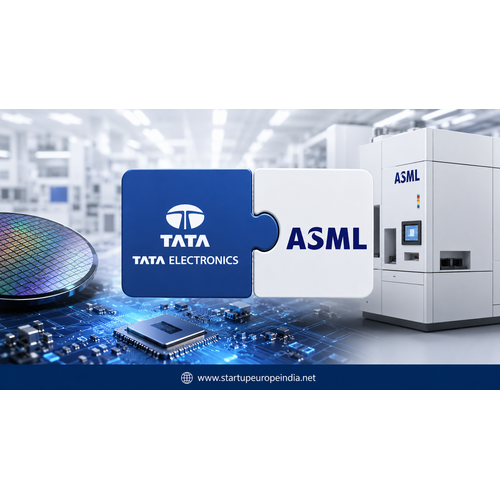
Tata Electronics and ASML Partnership Marks a Major Step for India's Semiconductor Ambitions

On May 16, 2026, Tata Electronics and ASML signed a Memorandum of Understanding to set up India's first commercial 300mm semiconductor fabrication plant in Dholera, Gujarat. The signing took place during Indian Prime Minister Narendra Modi's visit to the Netherlands, with Dutch Prime Minister Dick Schoof also present, reflecting the diplomatic weight both governments are placing on the deal.The partnership is significant because ASML is considered one of the most critical companies in the global semiconductor industry. The Dutch company manufactures advanced lithography machines used to produce semiconductor chips. Major chipmakers such as TSMC, Intel, and Samsung rely on ASML equipment for chip manufacturing.Under the agreement, ASML will deploy its suite of lithography tools and solutions to enable the establishment and ramp-up of the Dholera fab, covering talent development, lithography-intensive skill development, and proactive supply chain resilience. The companies will also develop R&D infrastructure to support the long-term success of the facility.The Specific Technology InvolvedThis is where the headline needs grounding. Both TSMC's cutting-edge 2nm fabs and the Dholera facility use 300mm wafers, but the real metric defining a chip's capability is the process node. The Dholera fab will operate at 28nm to 110nm nodes, using ASML's DUV (Deep Ultraviolet) lithography tools, not the more advanced EUV systems used for sub-10nm production.The specific nodes covered are 28nm, 40nm, 55nm, 90nm, and 110nm, according to the ASML press release, with process technology licensed from Taiwan's Powerchip Semiconductor Manufacturing Corporation (PSMC).ASML's most sophisticated tools, used for producing 3nm and 5nm chips globally, remain outside the immediate scope. The partnership instead lays groundwork for potential future upgrades.Production Targets and Chip TypesAt full capacity, the fab will produce up to 50,000 wafers per month, manufacturing power management ICs, display drivers, microcontrollers, and high-performance computing chips for automotive, computing and data storage, wireless communications, and AI applications.Initial commercial production is scheduled for late 2026, which is an aggressive timeline for a greenfield semiconductor project, requiring seamless coordination between construction, equipment installation, and testing. Throughout 2026, ASML tools will be installed and calibrated to meet the requirements of the 28nm to 110nm nodes.The Dholera site was formally designated a Special Economic Zone in April 2026.The Partnership Stack Behind the FabThe ASML deal is not a standalone arrangement. It sits on top of a broader partnership architecture that Tata has been assembling over the past two years.In September 2024, Tata Electronics completed a definitive agreement with PSMC of Taiwan, covering technology transfer for the full node range from 28nm to 110nm. PSMC is the world's seventh-largest pure-play foundry, operating four 12-inch and two 8-inch fabs in Taiwan with annual output exceeding 2.1 million 12-inch equivalent wafers.Tata Electronics has already dispatched over 200 personnel to PSMC's Taiwan facilities for training in skills required to operate the Dholera fab, according to the Economic Times. The first chip from the Dholera unit is expected in December 2026, according to India's federal IT minister Ashwini Vaishnaw.Tata's total investment in semiconductor technology reportedly reaches $14 billion, including collaborations with Intel. Intel is positioned as a potential early customer, with a focus on manufacturing and packaging Intel products for the Indian market and developing advanced packaging capabilities. Separately, Tata is building an OSAT (Outsourced Semiconductor Assembly and Test) facility in Assam.What Tata Electronics IsTata Electronics is a wholly owned subsidiary of Tata Sons. Founded in 2020 as a greenfield venture, the company operates across electronics manufacturing services, semiconductor assembly and test, semiconductor foundry services, and design services. It has become a significant manufacturing partner in the Apple supply chain through investments connected to Wistron and Pegatron operations in India.Why Mature Nodes MatterThe 28nm to 110nm range draws less attention than cutting-edge AI chip nodes, but it is where global supply chain pressure has been most acute and sustained. These specific nodes are critical for the automotive, consumer electronics, and power management sectors, which currently face the highest supply chain pressures.India's heavy dependence on imported chips has been a strategic vulnerability, sharpened by COVID-era supply disruptions and accelerating US-China technology decoupling. Building domestic capacity at mature nodes addresses immediate demand while creating the manufacturing base, engineering talent, and supplier ecosystem that any future move toward advanced nodes would require.The project is projected to create over 20,000 direct and indirect skilled jobs. Tata's multi-fab vision for Dholera indicates this facility is intended as the first in a longer-term build-out, not a single standalone investment.The Bigger PictureIndia has committed significant capital in subsidies and incentives to attract semiconductor investment across multiple simultaneous projects. The Tata-ASML-PSMC stack at Dholera is currently the most advanced and best-resourced of these, with an equipment partner, a process technology licensor, anchor customers in discussion, and a trained workforce already in preparation.The facility is also expected to integrate advanced packaging and testing capabilities over time, which would extend its relevance beyond wafer fabrication into the broader semiconductor value chain.For India, the significance is less about immediate competitive threat to TSMC or Intel and more about whether the country can demonstrate that a credible, globally trusted semiconductor supply chain can be built on its soil. The Dholera fab is the first real test of that proposition.--Join Startup Eirope India Netowork - Scaling innovation and talent, advisors, and partners across Europe, the UK, and India www.startupeuropeindia.net
Mon, May 18, 2026
Tata Electronics and ASML Partnership Marks a Major Step for India's Semiconductor Ambitions
Sarah   J

Sarah J

Tue, Mar 31, 2026

India's Zero-Commission Ride-Hailing Platform Takes Its Model to Europe
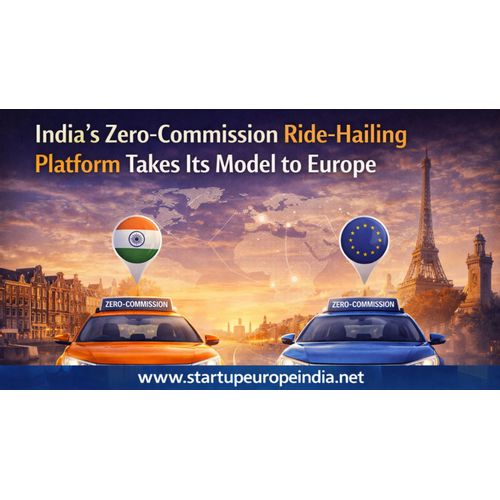
The Hindu reports that Moving Tech Innovations, the Bengaluru-based company behind Namma Yatri, has acquired Netherlands-based Automicle Holding BV in its first international move, marking a direct push into the European urban mobility market.The deal, announced on March 26, gives Moving Tech a foothold on the continent with a platform that already works with European city authorities on digital parking systems and integrated public transport. Financial terms were not disclosed.The strategic rationale is straightforward: European ride-hailing remains dominated by platforms that charge drivers commissions of anywhere between 10 and 50%. Moving Tech's entire model is built around eliminating that layer. Across its Indian platforms, including Namma Yatri, Yatri Sathi, and Bharat Taxi, the company has completed over 150 million trips and channelled more than Rs 2,500 crore in earnings directly to drivers without taking a cut."When we built Namma Yatri, we put cities and their people first," said co-founders Magizhan Selvan and Shan MS. "These are not local solutions; they are universal principles. Cities everywhere are seeking a mobility model that is open and community-led."Automicle's co-founders framed the deal as a two-way exchange, with European expertise in parking and integrated urban transport flowing back to Indian cities alongside Moving Tech's open-network model heading west.The acquisition follows a pre-Series A extension round in which Namma Yatri raised Rs 39.75 crore, roughly $4.4 million, with participation from Juspay founder Vimal Kumar. The company also pointed to renewed momentum in India-EU Free Trade Agreement talks as broader context for the move.
Tue, Mar 31, 2026
1
India's Zero-Commission Ride-Hailing Platform Takes Its Model to Europe