Back to news
Mon, May 18, 2026
EU-India
Europe-India

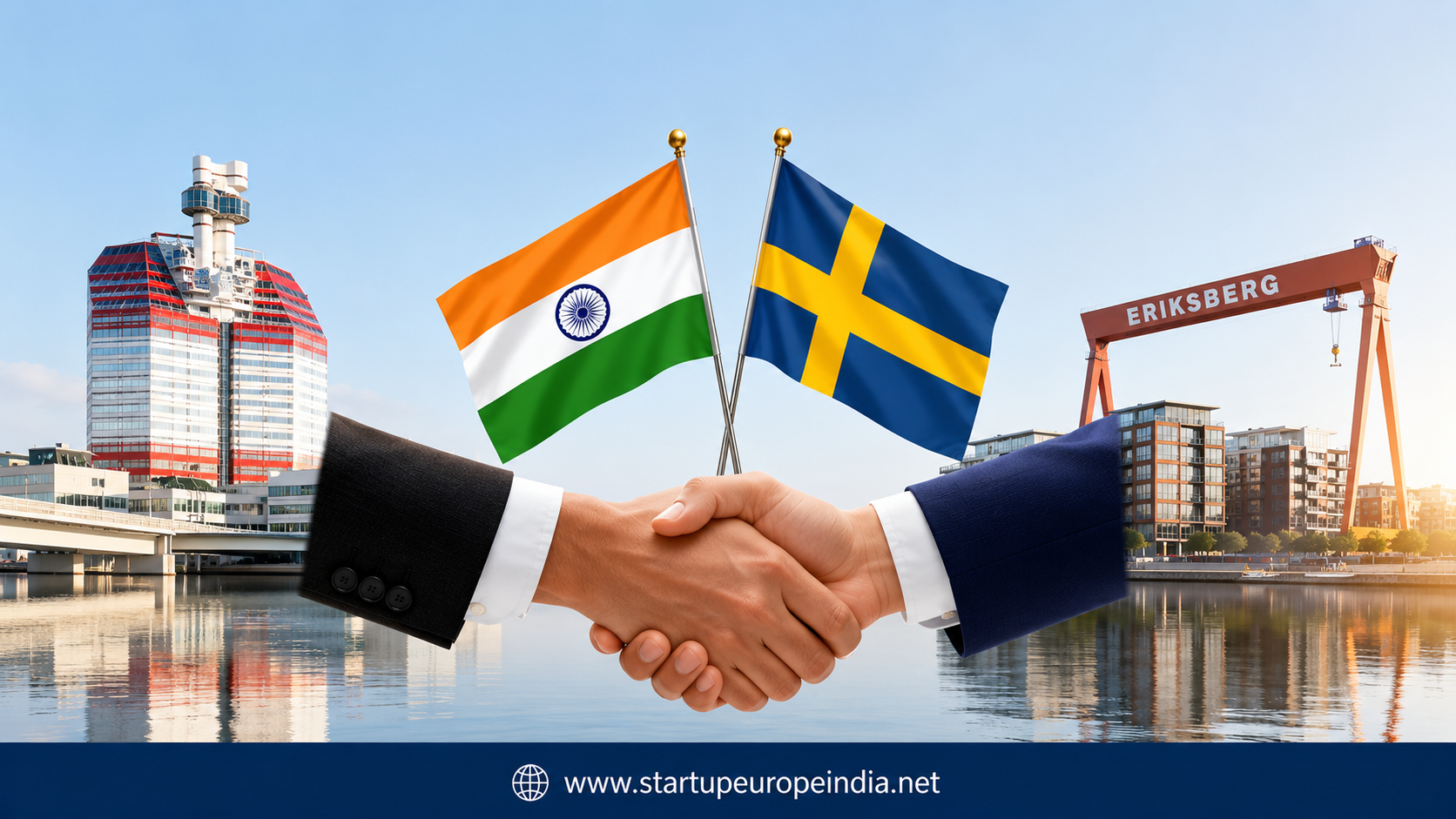
PM Modi in Gothenburg: India and Sweden's Strategic Partnership, May 17, 2026

Sarah J9 min read
PM Modi in Gothenburg: India and Sweden's Strategic Partnership, May 17, 2026

Prime Minister Narendra Modi visited Gothenburg, Sweden on May 17, 2026, as the third stop of his five-nation European tour covering the UAE, Netherlands, Sweden, Norway, and Italy. It was his first visit to Sweden since 2018, when he attended the inaugural India-Nordic Summit.

Swedish Gripen fighter jets escorted Modi's aircraft as it entered Swedish airspace. Prime Minister Ulf Kristersson received him personally at Gothenburg Airport. Crown Princess Victoria of Sweden joined the bilateral meeting and conveyed the wishes of King Carl XVI Gustaf and Queen Silvia. Swedish Deputy Prime Minister Ebba Busch was also present.

Gothenburg was chosen deliberately. It is Sweden's second-largest city and the country's industrial and manufacturing heartland, home to Volvo Group, which hosted the evening's European Round Table for Industry CEO session. Holding a diplomatic summit in a manufacturing city rather than the capital carried an implicit message about where both governments want the partnership to operate.

Modi was conferred Sweden's Royal Order of the Polar Star Commander Grand Cross, the highest honour Sweden awards a foreign head of government. It was his 31st international honour from a foreign country. He was also presented with a symbolic gift: a box containing faithful reproductions of two handwritten cards by Rabindranath Tagore, India's Nobel laureate poet, chosen to reflect the historical depth of India-Sweden ties.

THE HEADLINE OUTCOME: STRATEGIC PARTNERSHIP

India and Sweden elevated their bilateral relationship to a Strategic Partnership, adopting the India-Sweden Joint Action Plan 2026-2030 as the implementation framework.

The partnership rests on four named pillars drawn directly from the official joint statement: Strategic Dialogue for Stability and Security; Next-Generation Economic Partnership; Emerging Technologies and Trusted Connectivity; and Shaping Tomorrow Together, covering people, planet, health, and resilience.

Both sides committed to doubling bilateral trade and investment within five years through the "Make in India" and "Made with Sweden" initiatives. Bilateral trade stood at $7.75 billion in 2025. A bilateral summit titled "India-Sweden: Stronger Together - towards 2047" was agreed to be held in India in 2027, anchoring the five-year roadmap at heads-of-government level.

Kristersson reiterated Sweden's support for India's permanent membership of a reformed and expanded UN Security Council.

TECHNOLOGY: THE FULL PICTURE

  1. SWEDEN-INDIA TECHNOLOGY AND ARTIFICIAL INTELLIGENCE CORRIDOR (SITAC)

The Sweden-India Technology and Artificial Intelligence Corridor, named SITAC in the official joint statement, was formally agreed. Its scope covers AI, digital transformation, innovation, and advanced technology partnerships involving industry, startups, and research institutions from both countries.

The Swedish Deputy Prime Minister Ebba Busch attended the AI Impact Summit in New Delhi in February 2026 with a large delegation from the Swedish AI ecosystem. The joint statement records that Modi expressed appreciation for Sweden's participation. SITAC emerges directly from that engagement and gives it a bilateral institutional name and framework.

  1. JOINT INNOVATION PARTNERSHIP 2.0 AND THE INDIA-SWEDEN JOINT SCIENCE AND TECHNOLOGY CENTRE

The Joint Innovation Partnership 2.0 was launched, upgrading the existing bilateral innovation framework. It establishes a virtual India-Sweden Joint Science and Technology Centre (ISJSTC) to connect academic institutions from both countries and facilitate joint R&D.

The named technology domains in the partnership are artificial intelligence, 6G, quantum computing, critical minerals, renewable energy, and smart grid technologies. The 6G inclusion is directly relevant to Ericsson, which is headquartered in Sweden and was present at the European Round Table alongside Nokia, Vodafone, and Orange. Any India-Sweden 6G cooperation framework draws Ericsson into its scope commercially, even without naming the company in the agreement.

  1. SPACE: ISRO AND THE VENUS ORBITER MISSION

The most operationally specific deliverable of the entire visit was the MoU between ISRO and the Swedish Institute of Space Physics on the Indian Venus Orbiter Mission, formally named Shukrayaan.

The instrument Sweden will contribute is the Venusian Neutrals Analyzer (VNA), which will study how charged particles from the Sun interact with Venus's atmosphere and exosphere. The VNA is the ninth generation of the Swedish Institute of Space Physics's series of miniaturised ion and ENA (Energetic Neutral Atoms) instruments. The first generation, named SARA (Sub-keV Atom Reflecting Analyzer), flew on ISRO's Chandrayaan-1 in 2008-2009, making that the original basis of the ISRO-IRF collaboration. Sweden's Ambassador to India confirmed in September 2024 that ISRO and the Swedish Space Corporation were already working together on the mission; the Gothenburg MoU formalises that on official bilateral footing.

Shukrayaan's key dates: the Indian government formally approved the mission in September 2024. The launch is scheduled for March 29, 2028 from Sriharikota on a GSLV rocket, with a 112-day journey and orbital insertion around Venus on July 19, 2028. The preliminary design report for the spacecraft was completed in April 2026. The 100kg science payload includes 16 Indian instruments, 2 collaborative instruments, and an international payload. Sweden's VNA is among the confirmed international contributions.

Both leaders also agreed to pursue enhanced cooperation on space and geospatial technologies more broadly, noting India's role as a leading space nation and the role of Sweden's Esrange Space Center in Kiruna. Esrange is the northernmost satellite launch and space testing facility in Europe, capable of polar orbit launches and high-altitude balloon experiments, and one of a small number of facilities globally that can conduct certain types of re-entry testing.

Kristersson said at the joint press conference: "Sweden is proud to be on our way to Venus together with India. ISRO and Sweden's national space agency have joined forces since the 1980s."

  1. LEAD-IT 3.0

Both Prime Ministers welcomed the expansion of the Leadership Group for Industry Transition (LeadIT) and called for a new four-year phase, LeadIT 3.0, to be announced at COP31. LeadIT is a Sweden-India co-chaired global initiative focused on accelerating the transition of heavy industry toward net-zero emissions. The India-Sweden Industry Transition Partnership (ITP), a bilateral mechanism under LeadIT, was also recognised. The ITP focuses on the steel and cement sectors specifically. Its steel working group is co-led by India's Ministry of Steel and the Swedish Energy Agency, with the Council on Energy, Environment and Water (CEEW) and Swerim (Swedish Research Institute for Mining, Metallurgy and Materials) as knowledge partners. Its cement working group is co-led by India's Department for Promotion of Industry and Internal Trade and the Swedish Energy Agency, with NCCBM (National Council for Cement and Building Materials) and RISE (Research Institutes of Sweden) as knowledge partners. Moving to LeadIT 3.0 signals that the programme is consolidating as a permanent mechanism, not a rotating initiative.

  1. CRITICAL MINERALS

Both leaders encouraged collaboration in advanced mining and mineral processing technologies to facilitate efficient extraction from low-grade and complex critical mineral deposits, and committed to co-developing refining and downstream processing capabilities to enhance domestic value addition, with an explicit focus on rare earths supply chains.

Sweden holds some of Europe's largest rare earth mineral deposits, including the Kiruna iron ore field and Europe's largest identified deposit of rare earth elements discovered in northern Sweden in 2023 by state mining company LKAB, estimated at over one million tonnes of rare earth oxides. India's inclusion of Sweden as a critical minerals partner, alongside its separate critical minerals MoU with the Netherlands signed two days earlier, reflects a deliberate strategy of building diversified European supply chain relationships rather than a single bilateral dependency.

DEFENCE AND SECURITY

Both sides agreed to strengthen dialogue at the political, diplomatic, and defence levels, including direct exchanges between the National Security Advisors of both countries and their respective offices. A Defence Industrial Roadmap was agreed to be explored, with focus on potential joint manufacturing, technology transfer, and supply chain collaboration.

On counterterrorism, Modi thanked Kristersson for Sweden's support following the April 2025 Pahalgam attack in which 26 people were killed. Both leaders agreed on zero tolerance toward terrorism and called for action against those who back, finance, or provide safe havens for terrorist groups.

PEOPLE-TO-PEOPLE AND MOBILITY

Both leaders agreed to advance talent attraction and active promotion of people-to-people exchanges, specifically naming mobility of students and researchers through the Study in Sweden programme and highly skilled labour through the Work in Sweden programme. Both leaders also agreed to explore the possibility of direct and regular air links between Sweden and India, noting that no direct flight route currently exists between the two countries despite the depth of bilateral economic ties.

THE EUROPEAN ROUND TABLE FOR INDUSTRY

The CEO-level session at Volvo Group in Gothenburg on the evening of May 17 was co-hosted by Modi, Kristersson, and European Commission President Ursula von der Leyen. It was one of the most significant India-Europe business engagements in recent years.

Companies present covered five sectors. Telecom and digital: Vodafone, Ericsson, Nokia, and Orange. Technology and semiconductors: ASML, NXP, SAP, and Capgemini. Energy and clean tech: ENGIE, TotalEnergies, Shell, and Umicore. Infrastructure, mobility, and manufacturing: Volvo Group, Maersk, Airbus, Saab, ArcelorMittal, and Heidelberg. Healthcare and life sciences: AstraZeneca, Roche, Merck, Philips, Nestle, and Unilever.

Modi asked each company present to make one new, bold, concrete commitment to India within the next five years. He framed the ask around five priority sectors: telecom and digital infrastructure covering the 5G to 6G transition and AI-enabled networks; electronics and deep tech manufacturing; green energy and green hydrogen; infrastructure, mobility, and urban transformation; and healthcare and life sciences.

Modi also proposed four institutional mechanisms to anchor the India-Europe business relationship on a sustained basis: an annual India-Europe CEO Roundtable involving industry bodies from both sides; sector-specific working groups to fast-track collaboration in priority areas; an ERT India Desk or India Action Group to support companies already in India and facilitate new entrants; and government-backed investment facilitation to reduce friction for European firms entering Indian markets.

Von der Leyen described the India-EU Free Trade Agreement concluded in January 2026 as the "mother of all deals" and said the FTA is estimated to create 23,000 new jobs in Sweden, with more than 6,000 in the Gothenburg region. She expressed confidence in a "dynamic new era" in EU-India relations. Modi said: "We are trying to implement this as soon as possible."

Modi also separately met Robert Maersk Uggla, Chairman of Maersk, and discussed Maersk's investment opportunities in Indian port infrastructure and logistics.

INDIA-SWEDEN SME AND STARTUP PLATFORM

Both sides decided to develop an India-Sweden SME and Startup Platform to support innovation ecosystems in both countries and generate employment. This directly connects Sweden's deep technology startup ecosystem, particularly in Gothenburg and Stockholm, with India's manufacturing and digital scale.

GEOPOLITICAL FRAMING

Both sides underlined the importance of an effective multilateral system with the UN at its core. Both called for a comprehensive, just, and lasting peace in Ukraine through diplomacy and dialogue in line with the UN Charter. The India-Nordic Summit in Oslo on May 19, 2026, with the leaders of Norway, Sweden, Denmark, Finland, and Iceland, was confirmed as the next stage of regional engagement.

WHAT THE OFFICIAL SWEDISH GOVERNMENT PRESS RELEASE ADDS

The Swedish government's own press release, issued by Prime Minister Kristersson and Foreign Minister Maria Malmer Stenergard, characterised the partnership as deepening cooperation in "innovation, technology and green transition" and stressed the intensified focus on "economic security, supply chains, cyber issues and counterterrorism." The framing from the Swedish side emphasises security of supply chains as a standalone priority, not just a technology or trade issue. This reflects Sweden's position as a NATO member that joined the alliance in March 2024 and now approaches economic partnerships through a more explicit security lens than it did before.

Kristersson's statement: "Sweden and India share a partnership shaped by more than a century of cooperation, trust and entrepreneurship. I am confident that our cooperation will continue to grow through innovation, sustainability and digital transformation."

WHAT SET THIS APART FROM THE NETHERLANDS VISIT

The Netherlands visit produced 17 signed agreements across a broad range of sectors. The Sweden visit was more concentrated, with fewer documents but more depth in specific technology areas. Three things from Gothenburg that received insufficient coverage:

First, SITAC, the Sweden-India Technology and Artificial Intelligence Corridor, is the only bilaterally named AI corridor India has established with a European country to date. Its formal naming in the joint statement, and not just as a rhetorical ambition but as a structured cooperation framework, is more significant than the coverage suggested.

Second, the Venus Orbiter MoU is the most operationally concrete science agreement from Modi's entire five-nation tour. It connects two space agencies with a 40-year working history, on a defined mission with a fixed launch date (March 29, 2028), a specific instrument (VNA), and a known spacecraft design (preliminary design report completed April 2026). It is not a framework for future cooperation; it is a confirmed instrument on a confirmed mission.

Third, the critical minerals cooperation with Sweden, specifically on rare earth extraction and refining, sits alongside Sweden's underdiscussed position as the holder of Europe's largest identified rare earth deposit. The LKAB rare earths discovery in northern Sweden, estimated at over one million tonnes of rare earth oxides, is directly relevant to semiconductor and battery supply chains. India's engagement with Sweden on advanced mining and downstream processing is not separate from its semiconductor ambitions; it is part of the same supply chain logic.

You may also like

Sarah   J

Sarah J

Sun, Sep 6, 2026

Isar Aerospace Reaches Orbit: What It Means for Europe's Commercial Rocket Industry

German company Isar Aerospace has successfully launched its Spectrum rocket into orbit, marking an important milestone for Europe's privately developed launch industry. How does Spectrum compare with SpaceX, ISRO, China and Russia, and why is the launch significant?On 5 September 2026, German aerospace company Isar Aerospace successfully launched its Spectrum rocket from Andøya Spaceport in Norway.The flight reached orbit and deployed its customer payloads. It was the second flight of Spectrum, following an unsuccessful first launch in March 2025.The significance of the mission is specific: Spectrum is a privately developed European orbital launch vehicle that has now demonstrated successful orbital flight.This is different from saying that Europe has developed a rocket comparable in capability to the largest launch vehicles operated by SpaceX, China, India or Russia.The comparison becomes clearer when the launch vehicles and the underlying industrial models are examined separately.1. What is Isar Aerospace?Isar Aerospace is a German private aerospace company founded in 2018 and headquartered in Ottobrunn, near Munich.Its launch vehicle is Spectrum, a two-stage rocket designed primarily to launch small and medium-sized satellites into low Earth orbit and sun-synchronous orbit.Key specifications published by Isar include:Specification Spectrum Height 28 metres Diameter 2 metres Stages 2 LEO payload Up to 1,000 kg SSO payload Up to 700 kg First-stage engines 9 Aquila engines Second-stage engines 1 Aquila engine Propellant Liquid oxygen + propane Current first stage ExpendableThe September 2026 flight was therefore an orbital demonstration and commercial launch milestone, rather than the introduction of a heavy-lift rocket.2. How does Spectrum compare with SpaceX?The most useful comparison is with Falcon 9, because Falcon 9 is SpaceX's principal commercial orbital launcher.Isar Spectrum SpaceX Falcon 9 Height 28 m 70 m LEO payload Up to ~1 tonne Up to 22.8 tonnes Stages 2 2 First-stage engines 9 9 First-stage reuse No Yes Primary market Small/medium satellites Broad commercial and government missions Orbital status Successful orbital flight demonstrated in 2026 Mature operational systemSpaceX's Falcon 9 lifts up to 22,800 kg to LEO when flown expendable (about 17,500 kg when the booster is recovered).On published payload capacity, Falcon 9 can therefore place more than 20 times as much mass into LEO as Spectrum.The two rockets also have different launch architectures.Spectrum is currently an expendable launcher. Falcon 9's first stage is designed for recovery and reuse.This distinction affects the economics and operational model of the two systems, but the most straightforward factual comparison is that they occupy different payload classes and are at different stages of operational maturity.3. How does Spectrum compare with India's ISRO?India has a much longer-established orbital launch programme.The Indian Space Research Organisation (ISRO) operates the PSLV, GSLV and LVM3 launch vehicle families.The LVM3 is particularly useful for comparison.ISRO's own published specifications give LVM3 a payload capability of approximately 8,000 kg to a 600 km circular low Earth orbit. The vehicle is approximately 43.5 metres tall with a liftoff mass of about 640 tonnes.The comparison is therefore:Spectrum ISRO LVM3 Height 28 m ~43.5 m LEO payload class ~1 tonne ~8 tonnes Stages 2 3 Reusable No No Development model Private company Indian national space programme Operational history Orbital success demonstrated in 2026 Multiple successful missions since 2017ISRO has also used LVM3 for commercial satellite launches, including missions for OneWeb.The two systems therefore differ both in payload class and in their institutional origins.4. How does it compare with China's rockets?China operates a large family of Long March launch vehicles covering a wide range of payload classes.One of the country's largest operational launchers is Long March 5.Long March 5 has a published payload capability of approximately 25 tonnes to low Earth orbit.That puts Long March 5 in a completely different payload category from Spectrum.Spectrum Long March 5 LEO payload ~1 tonne ~25 tonnes Stages 2 2 core stages plus strap-on boosters Reusable No No Launch system Private European company Chinese national launch system Major applications Commercial satellite launches Large spacecraft, space infrastructure and exploration missionsChina's launch capability also includes human-spaceflight and lunar missions, alongside a growing commercial launch sector.Therefore, the significance of Spectrum's flight should not be measured against China's overall space programme in terms of technical capability.The relevant development is instead the emergence of another European commercial launch provider.5. How does it compare with Russia?Russia has extensive orbital-launch heritage through the Soviet and Russian space programmes.The Soyuz family is one of the world's longest-operating orbital launch systems.The comparison is therefore fundamentally different from the comparison with Isar.Russia's launch capability is based on decades of accumulated development and operational experience, while Isar represents a new private European entrant into orbital launch services.Russia also operates launch vehicles across several payload classes.Consequently, Spectrum's successful orbital flight does not represent a replacement for Russia's existing launch capabilities. It represents the addition of a new European commercial launch capability.6. Europe already had rockets. So what is different about Isar?This is perhaps the most important factual distinction.Europe did not previously lack orbital launch vehicles.The European launcher programme includes:Ariane 6Europe's principal heavy launcher.Ariane 6 is available in two configurations:Ariane 62Ariane 64The Ariane 64 configuration can carry approximately 21.6 tonnes to low Earth orbit, roughly double the Ariane 62 configuration's capacity of about 10.3 tonnes.Vega-CA smaller European launcher designed for missions including Earth-observation and other satellites.Vega-C's payload capability varies according to orbit, with a reference payload capacity of approximately 2.3 tonnes to a 700 km polar orbit.Spectrum therefore isn't Europe's first orbital rocket.It is significant because it represents a privately developed European launcher operating outside the traditional Ariane/Vega programme structure.7. The European commercial-launch landscape is expandingIsar Aerospace is also not the only European company developing an orbital launcher.Germany's Rocket Factory Augsburg (RFA) is developing RFA ONE.Spain's PLD Space is developing the Miura family of launch vehicles.The European Space Agency has established programmes intended to support the development of commercially operated European launch services.ESA's European Launcher Challenge is specifically designed to establish additional European commercial launch-service providers and increase European access to space. Isar Aerospace was one of the operators selected for the programme, and its contract requires an orbital launch no later than 2027, a milestone the September 2026 flight has already satisfied.The development can therefore be viewed as an expansion from a European launcher structure dominated by institutional programmes toward a structure that includes multiple privately developed launch companies.8. What has actually been proven by the September 2026 flight?It is useful to separate what the flight demonstrates from what remains to be demonstrated.Demonstrated1. Orbital capabilitySpectrum successfully reached orbit.2. Private European developmentThe vehicle was developed by Isar Aerospace rather than being an Ariane or Vega government/industrial programme.3. Commercial launch capabilityThe mission carried customer payloads.4. European launch infrastructureThe launch took place from Andøya Spaceport in Norway.Not yet demonstrated by this flightA single successful flight does not establish:long-term launch reliabilityhigh launch cadencelarge-scale rocket manufacturingcommercial profitabilityreusabilityFalcon 9-level launch economicslarge-scale constellation deployment capabilityThose are separate performance and business metrics that require additional operational evidence.9. The numbers put the achievement in perspectiveA simple payload comparison illustrates the different positions of the major launch systems:Launcher Approximate LEO payload Reusable first stage? Isar Spectrum ~1 tonne No Vega-C ~2.3 tonnes to 700 km polar orbit No ISRO LVM3 ~8 tonnes to 600 km orbit No Ariane 64 ~21.6 tonnes to LEO No SpaceX Falcon 9 ~22.8 tonnes to LEO Yes China Long March 5 ~25 tonnes to LEO NoThese figures should not be interpreted as a ranking of the overall space programmes. Payload capacity depends on the target orbit and mission configuration, and launch vehicles are designed for different markets.But they show clearly that Spectrum belongs to a smaller payload class than Falcon 9, Ariane 64, LVM3 and Long March 5.10. Why the launch matters for EuropeThe factual significance is therefore not primarily the size of Spectrum.It is the change in the composition of Europe's launch industry.Europe now has:Institutional launch systemsAriane 6Vega-Cand an expanding group of:Privately developed commercial launch systemsIsar AerospaceRocket Factory AugsburgPLD Spaceother emerging European providersThis creates a broader European launch ecosystem with multiple companies developing their own vehicles, propulsion systems, manufacturing processes and commercial customer bases.For European governments and institutions, additional domestic launch providers can also provide another source of launch capacity for European satellites.That is relevant to Europe's objective of maintaining autonomous and resilient access to space. ESA and the European Commission have both identified this as an important element of European space policy.11. The significance in one sentenceThe most factually precise way to describe the September 2026 achievement is:Isar Aerospace has demonstrated that a privately developed European orbital launch vehicle can successfully reach orbit and deliver customer payloads, adding a new commercial-launch capability to Europe's existing Ariane and Vega programmes.It is not evidence that Spectrum has the launch capacity of Falcon 9, LVM3, Ariane 6 or Long March 5.It is evidence that Europe's launch sector now includes a privately developed orbital rocket that has successfully completed an orbital mission.The next stage is operational: repeated launches, reliability, manufacturing scale, pricing, customer demand and the development of future launch vehicles.That is where the significance of Isar Aerospace will ultimately be measured.
Sun, Sep 6, 2026
Isar Aerospace Reaches Orbit: What It Means for Europe's Commercial Rocket Industry
Sarah   J

Sarah J

Sat, Jul 18, 2026

India has become the third country, after the United States and China, to achieve orbital launch capability through a privately developed rocket

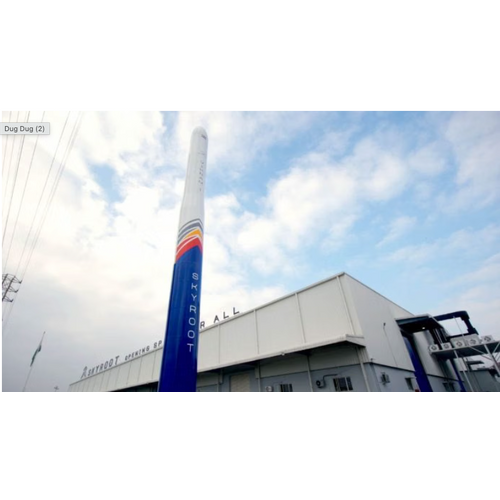
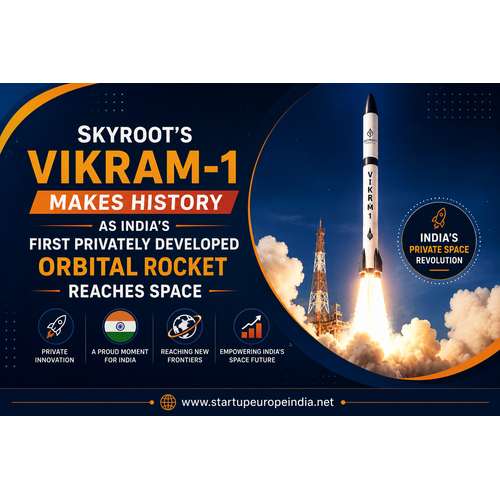
Hyderabad-based Skyroot Aerospace successfully launched Vikram-1, India’s first privately developed orbital launch vehicle, from the Satish Dhawan Space Centre in Sriharikota on July 18, 2026. The rocket lifted off at 12:05:30 p.m. Indian Standard Time as part of Mission Aagaman, meaning “arrival.”Around 15 minutes after launch, Vikram-1 successfully deployed payloads into a low Earth orbit at an altitude of approximately 450 kilometres. ISRO confirmed that two satellites—Skyroot’s SCOPE and a satellite from Grahaa Space—were injected into orbit. Other payloads remained attached to the upper stage to conduct in-orbit experiments.India has operated orbital launch vehicles through the Indian Space Research Organisation since the successful launch of the Rohini satellite aboard SLV-3 in 1980. The significance of Mission Aagaman is that Vikram-1 was developed and launched by a private Indian company, although ISRO and the Indian National Space Promotion and Authorisation Centre provided facilities, technical support, safety oversight and regulatory clearances.The Vikram-1 RocketVikram-1 is a small-satellite launch vehicle standing approximately 22 metres tall. It is designed to carry payloads of up to 350 kilograms into low Earth orbit.The four-stage vehicle consists of three solid-fuel stages and a liquid-fuel orbital adjustment module. Its upper stage is powered by a 3D-printed liquid engine and is designed to support precise orbital deployment. The rocket also incorporates carbon-composite structures, avionics and thermal-protection technologies developed by Skyroot.The Vikram launch-vehicle series is named after Vikram Sarabhai, the scientist widely regarded as the father of India’s space programme.Skyroot is positioning Vikram-1 as a dedicated and rideshare launcher for small satellites requiring customised orbital deployment. The company argues that such missions can provide customers with greater control over launch timing and orbital destination than travelling as secondary payloads on larger rockets.Payloads and ExperimentsThe mission carried multiple customer payloads and in-orbit experiments from Indian and international organisations.ISRO has officially confirmed that two satellites, SCOPE and Grahaa, were successfully placed into low Earth orbit. The remaining payloads were carried on the upper stage for in-orbit experiments.Before launch, the announced mission manifest included:Skyroot’s SCOPE satelliteGrahaa Space’s SOLARAS S3 satelliteA technology demonstration from German space company DCUBEDEmbrace, a robotic arm experiment developed by Cosmoserve Space for orbital-debris captureThe announced manifest also included symbolic payloads: a floral-shaped artwork called Cosmic Bloom and a miniature 18-karat gold rocket honouring Indian scientific figures C.V. Raman, Vikram Sarabhai and A.P.J. Abdul Kalam. These items were listed before launch, but official post-launch statements have not separately confirmed the operational status of every individual experiment.Mission Aagaman was intended to test Vikram-1’s propulsion, avionics, telemetry, stage separation, guidance, navigation and control systems under actual flight conditions. Skyroot described the flight as the first of a planned series of development missions ahead of routine commercial operations.From Vikram-S to Vikram-1Skyroot Aerospace was founded in 2018 by former ISRO engineers Pawan Kumar Chandana and Naga Bharath Daka.The company completed its first spaceflight in November 2022 with Vikram-S, a suborbital technology-demonstration rocket launched under Mission Prarambh. That flight made Skyroot the first private Indian company to launch a rocket into space from Indian soil, although Vikram-S did not enter orbit.Vikram-1 represents a significantly more demanding technical achievement. Reaching orbit requires a rocket not only to climb above Earth’s atmosphere but also to accelerate its payload to the horizontal velocity needed to remain in orbit. The vehicle must complete a carefully timed sequence of propulsion, stage-separation and navigation operations before deploying its payloads.India opened more of its space sector to private participation in 2020 and subsequently established a framework through IN-SPACe for private companies to access ISRO facilities and technical expertise. For Vikram-1, ISRO supported solid-motor casting and testing, liquid-engine testing, vehicle integration, trajectory analysis and launch-pad operations.Reaction and Next StepsPrime Minister Narendra Modi called the successful launch a defining moment in India’s space journey. He said growing private-sector participation was opening new frontiers and accelerating innovation, adding that the achievement would encourage young people to “dream bigger and innovate fearlessly.”Skyroot said Mission Aagaman was a test flight and that it expects to conduct additional development flights before beginning routine commercial launches. The company ultimately aims to provide frequent, dedicated launch services for small satellites.The achievement does not replace India’s longstanding government space-launch capability. Instead, it expands the country’s space ecosystem by demonstrating that an Indian private company can independently develop an orbital-class launch vehicle and successfully place satellites into orbit with institutional support from ISRO and IN-SPACe.Sources: Indian Space Research Organisation, Prime Minister’s Office of India, Reuters, Skyroot Aerospace and Space.com.Image courtesy: Skyroot AerospaceSEINET is an execution focused network for operators building partnerships and growth in EU-India-UK corridor in four key clusters - Space, Deep Tech, Defense and Energy. Apply to sign up www.startupeuropeindia.net
Sat, Jul 18, 2026
India has become the third country, after the United States and China, to achieve orbital launch capability through a privately developed rocket
Sarah   J

Sarah J

Sat, Jul 18, 2026

Skyroot's Vikram-1 Makes History as India's First Privately Developed Orbital Rocket Reaches Space

Sat, Jul 18, 2026
Skyroot's Vikram-1 Makes History as India's First Privately Developed Orbital Rocket Reaches Space