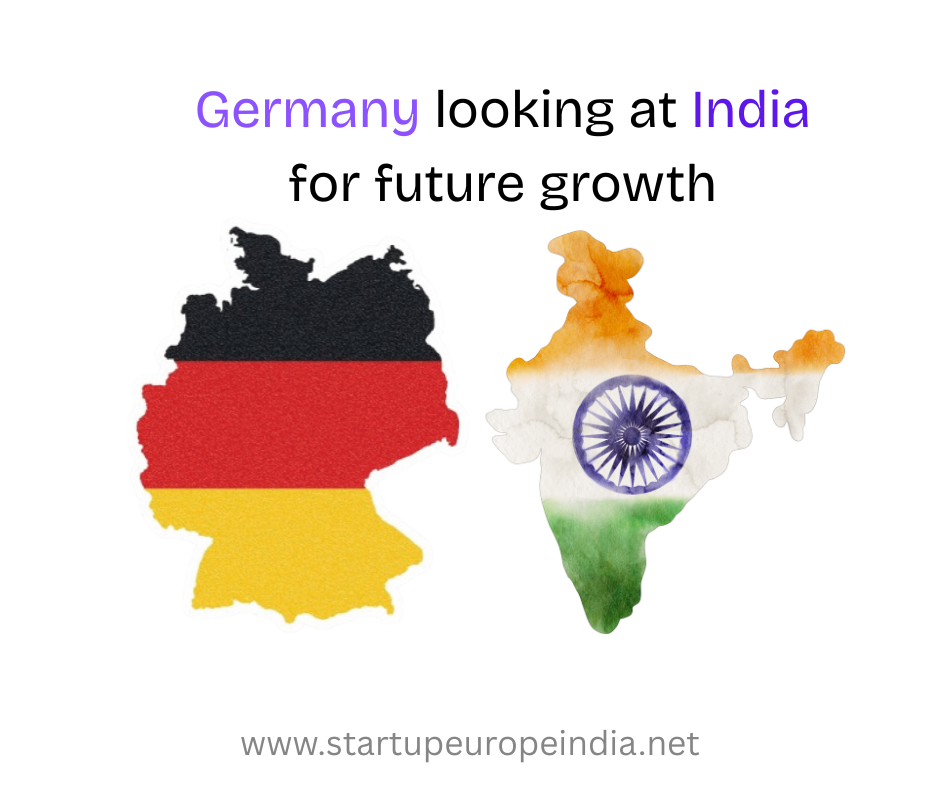
Drawing from the sources provided, the key points regarding Germany’s strategic pivot towards India as it navigates a shifting global order.
1. Strategic Realism and the Shift in Diplomacy
Germany is moving away from its previous "values-oriented" foreign policy—often perceived by India as "preaching"—towards a "strategic realism" that prioritises mutual interests. Berlin is looking for new opportunities and alliances as its traditional world order falls apart due to the war in Ukraine, US nationalism, and China’s quest for economic dominance. India is now seen as a crucial "third option" and a rising global power that can serve as a counterweight to these dependencies.
2. Economic Synergy and Diversification
Both nations are seeking to diversify their supply chains to reduce overdependence on China.
- What India wants: Market access to the EU, direct investment, and, most importantly, technology transfer through joint production.
- What Germany wants: Access to India’s massive market and a steady flow of skilled labor, particularly in the healthcare sector, where Germany faces a critical shortage. Notably, Indian students already represent the largest group of foreign students in Germany.
- Barriers: German CEOs have expressed frustration over Indian trade barriers and "dual-use" restrictions, while Indian investors have criticised German labour laws as a hindrance to investment.
3. The EU-India Trade Deal "Crunch Time"
After 17 years of negotiations, there is a significant push to finalise an EU-India Trade Agreement.
- Sticking Points: Major hurdles include carbon taxes on Indian steel, high tariffs on European cars, and protections for agricultural products.
- Deadlines: Officials have suggested that 20 out of 24 chapters are closed, with a symbolic goal of signing a framework by January 27th, following India’s Republic Day.
4. Defence Cooperation as a "Litmus Test"
A potential €8 billion deal for six submarines is considered the ultimate test of the new "trust" between Berlin and Delhi.
- Trust and Technology: Unlike previous relationships where Germany withheld spare parts or restricted exports, this deal focuses on co-development and co-production within India.
- Strategic Autonomy: While India is looking for Western weaponry, it maintains a policy of "strategic autonomy," meaning it will not firmly align with any one camp and will continue to maintain its long-standing relationship with Russia for spare parts and defence needs.
5. Internal Political Challenges
The relationship faces scrutiny within Germany, particularly from the AfD (Alternative for Germany) party.
- The AfD Perspective: Co-leader Alice Weidel dismissed Friedrich Merz's trip to India as a "sightseeing tour," questioning why Germany provides climate development money to India while facing domestic economic decline.
- Indian Reaction: These comments were perceived by some in India as having a "racist note," reflecting a clichéd view of India as a tourism destination rather than the fastest-growing economy in the G20.
6. The Russia Factor
A major long-term question is whether India will eventually reduce its dependency on Russia. While Germany and the West are beginning to understand that India is "non-West" but not "anti-West," Berlin still views India’s relationship with Moscow as a significant pressure point. For Germany, India’s willingness to distance itself from Russia remains a litmus test for the depth of their partnership.
---
SEINET is an online go-to-market and strategic partnership ecosystem that connects corporate and startup leaders, enabling cross-border collaboration, market expansion, and long-term growth between Europe and India. Request to Join for Free www.startupeuropeindia.net
_<->1708724263995_9Y10OskXA8FdggLg.jpeg?w=3840&q=75)