Back to news
Mon, Feb 3, 2025
Impact Investment
EU-India
India
Foundation

Family Office : Family Foundation and Philanthropy

Anirudh Agrawal3 min read
1
1
Family Office : Family Foundation and Philanthropy

family office is a private wealth management advisory firm that serves ultra-high-net-worth individuals (UHNWIs) or business families. It is designed to manage the financial and investment needs of a single family or a group of families, providing a comprehensive and personalized approach to wealth management, wealth preservation and wealth creation. Family offices handle a wide range of services, including investment management, estate planning, tax optimization, philanthropy, and even lifestyle management.

Types of Family Offices:

  1. Single-Family Office (SFO):
  • Serves one wealthy family.
  • Tailored exclusively to the needs and goals of that family.
  • Can be highly customized but also expensive to operate.
  1. Multi-Family Office (MFO):
  • Serves multiple families, often with similar wealth levels or interests.
  • Shares resources and costs among families, making it more cost-effective.
  • Offers a broader range of services but may be less personalized than an SFO.

Key Functions of a Family Office:

Wealth Management

Financial Planning

Concierge and Lifestyle Services

Governance and Family Harmony

Philanthropy

> Foundations and Philanthropy <


Business Family offices and Business family offices are coming up big way in India, which is potentially shaping numerous high risk initiatives in social entrepreneurship, impact investing, research and development, education and SDGs.


Business Family Foundation in India is a philanthropic organization established by a business family to manage and channel their wealth toward charitable, social, and developmental causes. These foundations are typically set up as trusts or societies under Indian laws and are governed by the Income Tax Act, 1961, and other relevant regulations. They serve as a structured way for business families to give back to society, fulfill corporate social responsibility (CSR) obligations, and create a lasting legacy.

Key Features of a Business Family Foundation in India:

Legal Structure:

  • Most foundations are registered as:
  • Public Charitable Trusts (under the Indian Trusts Act, 1882).
  • Societies (under the Societies Registration Act, 1860).
  • Section 8 Companies (under the Companies Act, 2013, for non-profit purposes).
  • These structures provide tax benefits and ensure compliance with Indian laws.

Purpose and Objectives:

  • Foundations focus on areas such as:
  • Education and skill development.
  • Healthcare and sanitation.
  • Poverty alleviation and rural development.
  • Environmental sustainability.
  • Arts, culture, and heritage preservation.
  • Women empowerment and child welfare.

Funding:

  • Funded by the business family’s wealth, often through donations from the family or their businesses.
  • May also receive grants, donations, or CSR funds from other entities.

Tax Benefits:

  • Donations to these foundations are eligible for tax deductions under Section 80G of the Income Tax Act.
  • Foundations themselves can claim tax exemptions under Section 11 and 12 if they meet certain conditions (e.g., using funds for charitable purposes).

Governance:

  • Managed by a board of trustees or governing council, often including family members and external experts.
  • Requires transparency and accountability in operations, especially if registered under the Foreign Contribution (Regulation) Act (FCRA) for receiving foreign funds.

Role of Business Family Foundations in India:

Philanthropy:

  • Enable business families to contribute to social causes and address pressing issues in India, such as poverty, education, and healthcare.

CSR Compliance:

  • Under the Companies Act, 2013, companies with a net worth of ₹500 crore or more, turnover of ₹1,000 crore or more, or net profit of ₹5 crore or more are required to spend 2% of their average net profits on CSR activities. Many business families use their foundations to fulfill these obligations.

Legacy Building:

  • Foundations help business families create a lasting impact and legacy beyond their business achievements.
  • They often reflect the family’s values and commitment to social responsibility.

Community Engagement:

  • Foundations engage with local communities, NGOs, and government bodies to implement programs and initiatives.

Examples of Prominent Business Family Foundations in India:

Tata Trusts:

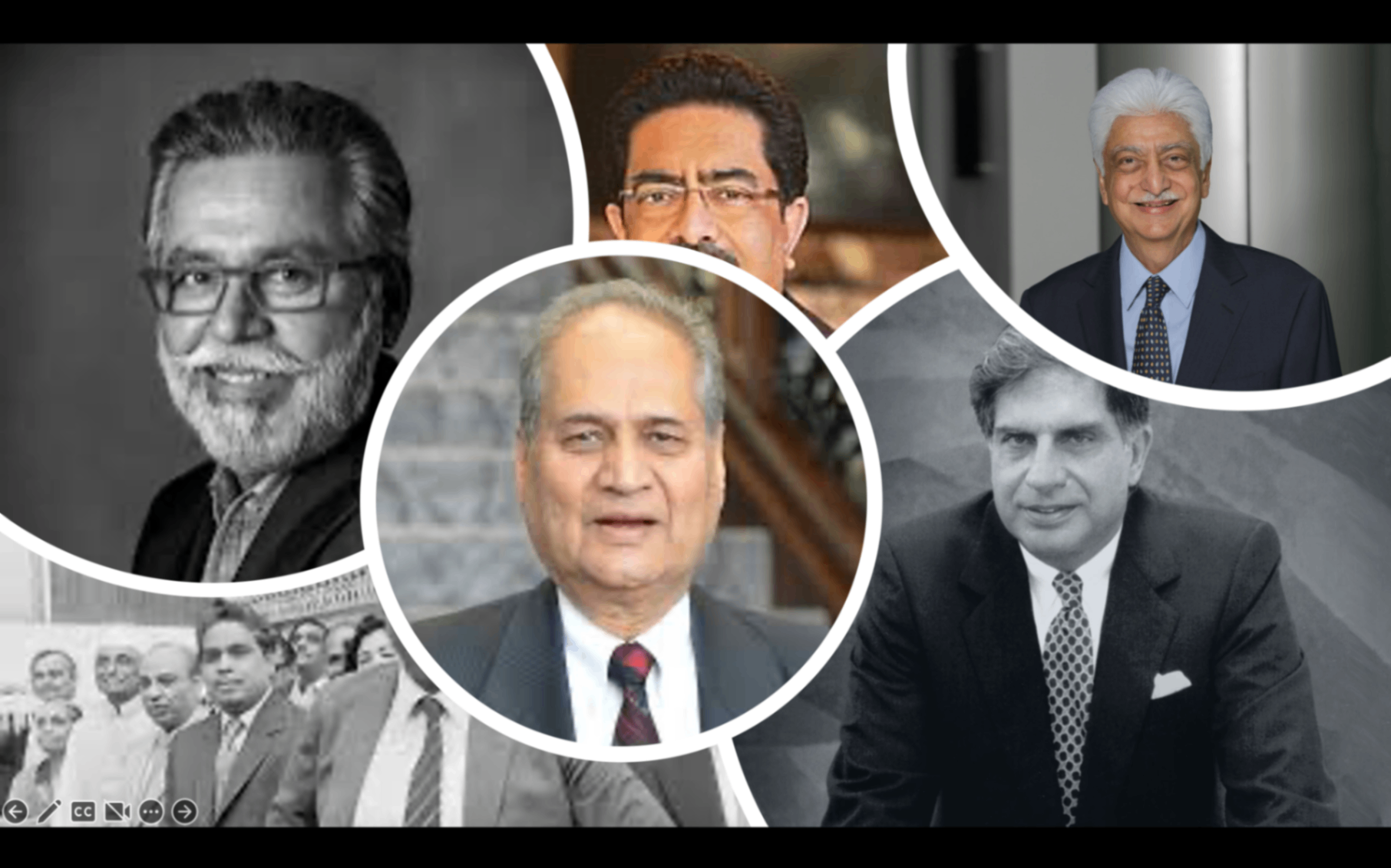
  • Established by the Tata family, one of India’s oldest and most respected business families.
  • Focus areas include education, healthcare, and rural development.

Reliance Foundation:

  • Founded by the Ambani family, it focuses on rural transformation, education, health, and disaster response.

Infosys Foundation:

  • Led by Sudha Murthy, it works in areas like education, healthcare, and rural development.

Wipro Foundation:

  • Focuses on education, healthcare, and environmental sustainability.

Shiv Nadar Foundation:

  • Established by HCL founder Shiv Nadar, it focuses on education and art.


You may also like

Sarah   J

Sarah J

Sat, Jul 18, 2026

India has become the third country, after the United States and China, to achieve orbital launch capability through a privately developed rocket

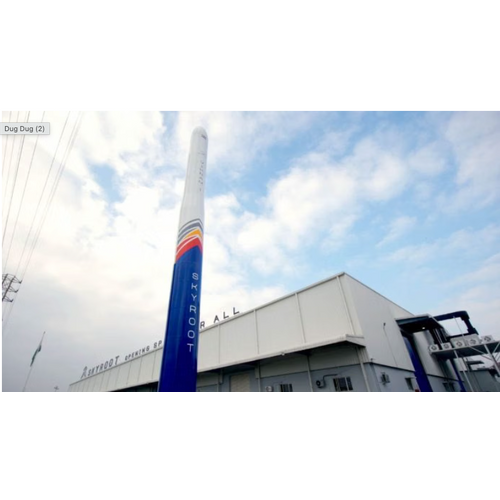
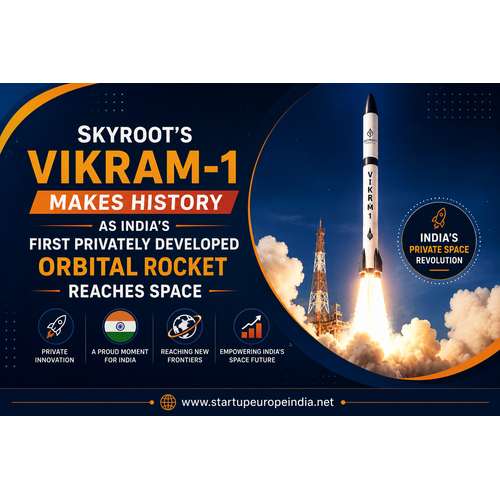
Hyderabad-based Skyroot Aerospace successfully launched Vikram-1, India’s first privately developed orbital launch vehicle, from the Satish Dhawan Space Centre in Sriharikota on July 18, 2026. The rocket lifted off at 12:05:30 p.m. Indian Standard Time as part of Mission Aagaman, meaning “arrival.”Around 15 minutes after launch, Vikram-1 successfully deployed payloads into a low Earth orbit at an altitude of approximately 450 kilometres. ISRO confirmed that two satellites—Skyroot’s SCOPE and a satellite from Grahaa Space—were injected into orbit. Other payloads remained attached to the upper stage to conduct in-orbit experiments.India has operated orbital launch vehicles through the Indian Space Research Organisation since the successful launch of the Rohini satellite aboard SLV-3 in 1980. The significance of Mission Aagaman is that Vikram-1 was developed and launched by a private Indian company, although ISRO and the Indian National Space Promotion and Authorisation Centre provided facilities, technical support, safety oversight and regulatory clearances.The Vikram-1 RocketVikram-1 is a small-satellite launch vehicle standing approximately 22 metres tall. It is designed to carry payloads of up to 350 kilograms into low Earth orbit.The four-stage vehicle consists of three solid-fuel stages and a liquid-fuel orbital adjustment module. Its upper stage is powered by a 3D-printed liquid engine and is designed to support precise orbital deployment. The rocket also incorporates carbon-composite structures, avionics and thermal-protection technologies developed by Skyroot.The Vikram launch-vehicle series is named after Vikram Sarabhai, the scientist widely regarded as the father of India’s space programme.Skyroot is positioning Vikram-1 as a dedicated and rideshare launcher for small satellites requiring customised orbital deployment. The company argues that such missions can provide customers with greater control over launch timing and orbital destination than travelling as secondary payloads on larger rockets.Payloads and ExperimentsThe mission carried multiple customer payloads and in-orbit experiments from Indian and international organisations.ISRO has officially confirmed that two satellites, SCOPE and Grahaa, were successfully placed into low Earth orbit. The remaining payloads were carried on the upper stage for in-orbit experiments.Before launch, the announced mission manifest included:Skyroot’s SCOPE satelliteGrahaa Space’s SOLARAS S3 satelliteA technology demonstration from German space company DCUBEDEmbrace, a robotic arm experiment developed by Cosmoserve Space for orbital-debris captureThe announced manifest also included symbolic payloads: a floral-shaped artwork called Cosmic Bloom and a miniature 18-karat gold rocket honouring Indian scientific figures C.V. Raman, Vikram Sarabhai and A.P.J. Abdul Kalam. These items were listed before launch, but official post-launch statements have not separately confirmed the operational status of every individual experiment.Mission Aagaman was intended to test Vikram-1’s propulsion, avionics, telemetry, stage separation, guidance, navigation and control systems under actual flight conditions. Skyroot described the flight as the first of a planned series of development missions ahead of routine commercial operations.From Vikram-S to Vikram-1Skyroot Aerospace was founded in 2018 by former ISRO engineers Pawan Kumar Chandana and Naga Bharath Daka.The company completed its first spaceflight in November 2022 with Vikram-S, a suborbital technology-demonstration rocket launched under Mission Prarambh. That flight made Skyroot the first private Indian company to launch a rocket into space from Indian soil, although Vikram-S did not enter orbit.Vikram-1 represents a significantly more demanding technical achievement. Reaching orbit requires a rocket not only to climb above Earth’s atmosphere but also to accelerate its payload to the horizontal velocity needed to remain in orbit. The vehicle must complete a carefully timed sequence of propulsion, stage-separation and navigation operations before deploying its payloads.India opened more of its space sector to private participation in 2020 and subsequently established a framework through IN-SPACe for private companies to access ISRO facilities and technical expertise. For Vikram-1, ISRO supported solid-motor casting and testing, liquid-engine testing, vehicle integration, trajectory analysis and launch-pad operations.Reaction and Next StepsPrime Minister Narendra Modi called the successful launch a defining moment in India’s space journey. He said growing private-sector participation was opening new frontiers and accelerating innovation, adding that the achievement would encourage young people to “dream bigger and innovate fearlessly.”Skyroot said Mission Aagaman was a test flight and that it expects to conduct additional development flights before beginning routine commercial launches. The company ultimately aims to provide frequent, dedicated launch services for small satellites.The achievement does not replace India’s longstanding government space-launch capability. Instead, it expands the country’s space ecosystem by demonstrating that an Indian private company can independently develop an orbital-class launch vehicle and successfully place satellites into orbit with institutional support from ISRO and IN-SPACe.Sources: Indian Space Research Organisation, Prime Minister’s Office of India, Reuters, Skyroot Aerospace and Space.com.Image courtesy: Skyroot AerospaceSEINET is an execution focused network for operators building partnerships and growth in EU-India-UK corridor in four key clusters - Space, Deep Tech, Defense and Energy. Apply to sign up www.startupeuropeindia.net
Sat, Jul 18, 2026
India has become the third country, after the United States and China, to achieve orbital launch capability through a privately developed rocket
Sarah   J

Sarah J

Sat, Jul 18, 2026

Skyroot's Vikram-1 Makes History as India's First Privately Developed Orbital Rocket Reaches Space

Sat, Jul 18, 2026
Skyroot's Vikram-1 Makes History as India's First Privately Developed Orbital Rocket Reaches Space
Sarah   J

Sarah J

Fri, Jul 17, 2026

India-UK CETA Delivers First US$10 Million Jewellery Export Shipment

Fri, Jul 17, 2026
India-UK CETA Delivers First US$10 Million Jewellery Export Shipment