Back to news
Thu, Feb 27, 2025
Defense

India’s Rise as a Global Defense Powerhouse: A New Era of Military Strength and Exports

Sarah J3 min read
India’s Rise as a Global Defense Powerhouse: A New Era of Military Strength and Exports


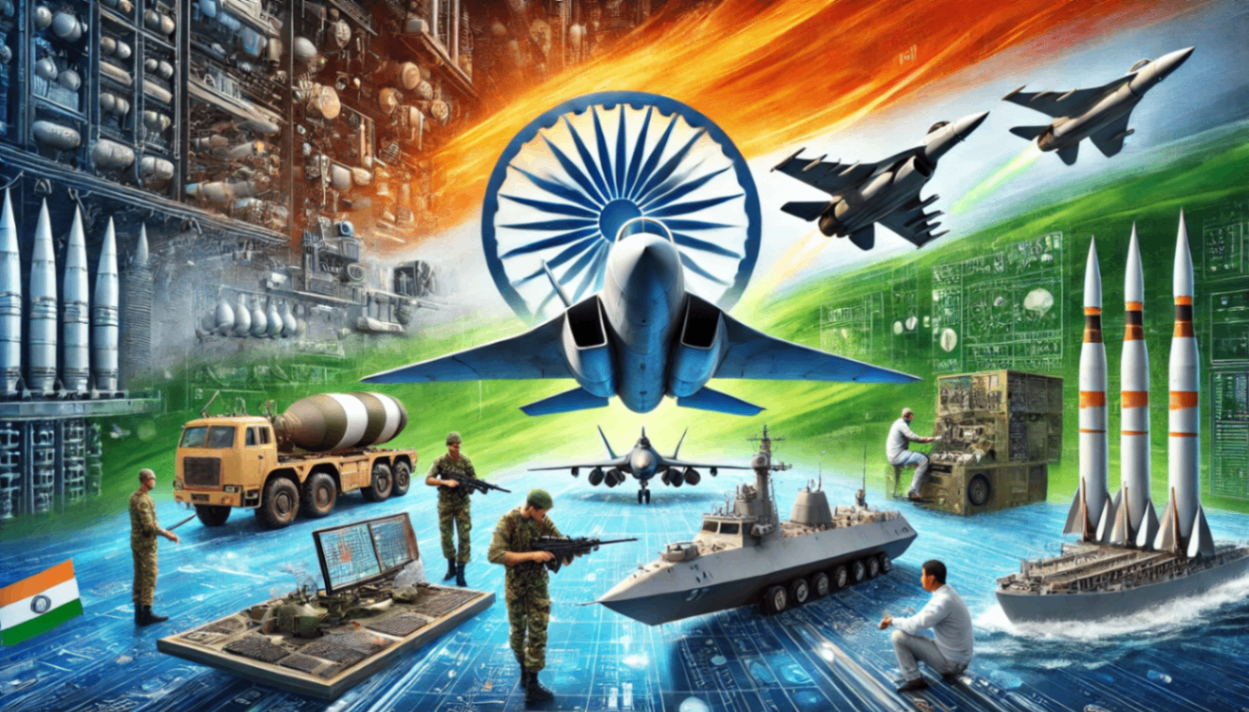
India is rapidly solidifying its position as a formidable player in the global defense industry, propelled by strategic initiatives, robust policy reforms, and a steadfast commitment to self-reliance. This transformation is not only enhancing the nation’s military capabilities but also positioning India as a key contributor to international defense markets.


Unprecedented Growth in Defense Exports


India’s defense exports have reached record levels, totaling approximately ₹21,083 crore ($2.63 billion) in the fiscal year 2023-24. This marks an impressive 32.5% year-on-year growth and a 31-fold increase over the past decade. The demand for Indian-made missile systems, advanced weaponry, and military aircraft continues to rise, reinforcing India’s reputation as a reliable arms exporter. With an expanding list of international buyers, India is increasingly becoming a preferred defense supplier.


Massive Investment in Military Modernization


New Delhi has set ambitious plans for transforming and modernizing its military. Over the next decade, India aims to invest approximately $200 billion in defense upgrades, focusing on advanced weapon systems, cybersecurity, artificial intelligence-driven warfare, and next-generation military technologies. This substantial financial commitment underscores India’s determination to enhance its strategic capabilities and achieve self-sufficiency in defense manufacturing.


Government Policies Driving Expansion


The Indian government’s ‘Make in India’ and ‘Atmanirbhar Bharat’ (Self-Reliant India) initiatives have been instrumental in boosting domestic defense production. These policies encourage private sector participation, ease restrictions on foreign direct investment, and promote the development of indigenous technology. With a defense budget of ₹6.22 lakh crore for 2024-25, India is reinforcing its commitment to strengthening military infrastructure, modernizing armed forces, and expanding domestic production.


Major Defense Collaborations and Deals


India has secured significant partnerships with global defense manufacturers, leading to rapid advancements in aerospace, missile technology, and naval systems. A landmark development includes the establishment of a military aircraft manufacturing plant in Vadodara, Gujarat, in collaboration with Airbus Spain. This facility will produce 40 C-295 transport aircraft, marking a major step toward indigenous aerospace production.


Additionally, India is expected to finalize a $200 million deal with the Philippines for the supply of Akash missile systems this year. This follows a $230-million agreement with Armenia for the same missile system, further showcasing India’s rising influence in the global defense export market.


Expanding Presence in Global Defense Markets


India’s military technology and defense systems are gaining recognition worldwide, with several nations expressing interest in procuring Indian-made equipment. From missile systems to warships and aircraft, India is emerging as a strong competitor in global defense exports. The country is actively negotiating multiple high-value defense deals, reinforcing its position as a trusted and cost-effective alternative to traditional suppliers.


Future Growth and Investment in Defense


India’s defense industry is poised for a compound annual growth rate (CAGR) of around 20% from 2024 to 2029. Increased government investment, rapid technological advancements, and rising foreign interest in Indian military technology are driving this growth. The sector is expected to play a crucial role in economic development, job creation, and national security enhancements.


India’s rapid transformation into a global defense leader reflects its strategic vision and commitment to self-reliance. With massive investments, government-backed initiatives, and expanding international collaborations, the country is well-positioned to shape the future of the global defense industry. As India continues to innovate and strengthen its military-industrial base, it is on track to become a dominant force in global military affairs.

-----

Join SEINET - the exclusive network for leaders driving growth and partnerships in tech and science - www.startupeuropeindia.net

You may also like

Sarah   J

Sarah J

Sat, Jul 18, 2026

India has become the third country, after the United States and China, to achieve orbital launch capability through a privately developed rocket

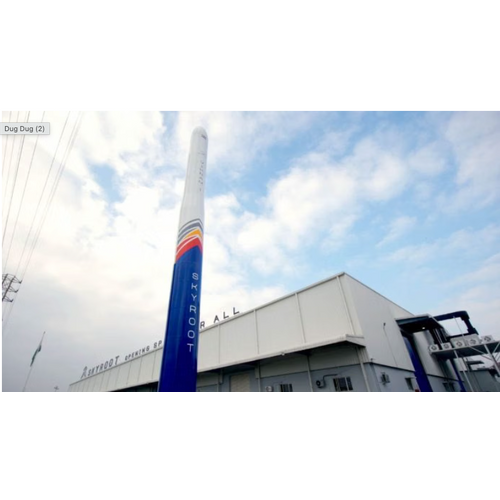
Hyderabad-based Skyroot Aerospace successfully launched Vikram-1, India’s first privately developed orbital launch vehicle, from the Satish Dhawan Space Centre in Sriharikota on July 18, 2026. The rocket lifted off at 12:05:30 p.m. Indian Standard Time as part of Mission Aagaman, meaning “arrival.”Around 15 minutes after launch, Vikram-1 successfully deployed payloads into a low Earth orbit at an altitude of approximately 450 kilometres. ISRO confirmed that two satellites—Skyroot’s SCOPE and a satellite from Grahaa Space—were injected into orbit. Other payloads remained attached to the upper stage to conduct in-orbit experiments.India has operated orbital launch vehicles through the Indian Space Research Organisation since the successful launch of the Rohini satellite aboard SLV-3 in 1980. The significance of Mission Aagaman is that Vikram-1 was developed and launched by a private Indian company, although ISRO and the Indian National Space Promotion and Authorisation Centre provided facilities, technical support, safety oversight and regulatory clearances.The Vikram-1 RocketVikram-1 is a small-satellite launch vehicle standing approximately 22 metres tall. It is designed to carry payloads of up to 350 kilograms into low Earth orbit.The four-stage vehicle consists of three solid-fuel stages and a liquid-fuel orbital adjustment module. Its upper stage is powered by a 3D-printed liquid engine and is designed to support precise orbital deployment. The rocket also incorporates carbon-composite structures, avionics and thermal-protection technologies developed by Skyroot.The Vikram launch-vehicle series is named after Vikram Sarabhai, the scientist widely regarded as the father of India’s space programme.Skyroot is positioning Vikram-1 as a dedicated and rideshare launcher for small satellites requiring customised orbital deployment. The company argues that such missions can provide customers with greater control over launch timing and orbital destination than travelling as secondary payloads on larger rockets.Payloads and ExperimentsThe mission carried multiple customer payloads and in-orbit experiments from Indian and international organisations.ISRO has officially confirmed that two satellites, SCOPE and Grahaa, were successfully placed into low Earth orbit. The remaining payloads were carried on the upper stage for in-orbit experiments.Before launch, the announced mission manifest included:Skyroot’s SCOPE satelliteGrahaa Space’s SOLARAS S3 satelliteA technology demonstration from German space company DCUBEDEmbrace, a robotic arm experiment developed by Cosmoserve Space for orbital-debris captureThe announced manifest also included symbolic payloads: a floral-shaped artwork called Cosmic Bloom and a miniature 18-karat gold rocket honouring Indian scientific figures C.V. Raman, Vikram Sarabhai and A.P.J. Abdul Kalam. These items were listed before launch, but official post-launch statements have not separately confirmed the operational status of every individual experiment.Mission Aagaman was intended to test Vikram-1’s propulsion, avionics, telemetry, stage separation, guidance, navigation and control systems under actual flight conditions. Skyroot described the flight as the first of a planned series of development missions ahead of routine commercial operations.From Vikram-S to Vikram-1Skyroot Aerospace was founded in 2018 by former ISRO engineers Pawan Kumar Chandana and Naga Bharath Daka.The company completed its first spaceflight in November 2022 with Vikram-S, a suborbital technology-demonstration rocket launched under Mission Prarambh. That flight made Skyroot the first private Indian company to launch a rocket into space from Indian soil, although Vikram-S did not enter orbit.Vikram-1 represents a significantly more demanding technical achievement. Reaching orbit requires a rocket not only to climb above Earth’s atmosphere but also to accelerate its payload to the horizontal velocity needed to remain in orbit. The vehicle must complete a carefully timed sequence of propulsion, stage-separation and navigation operations before deploying its payloads.India opened more of its space sector to private participation in 2020 and subsequently established a framework through IN-SPACe for private companies to access ISRO facilities and technical expertise. For Vikram-1, ISRO supported solid-motor casting and testing, liquid-engine testing, vehicle integration, trajectory analysis and launch-pad operations.Reaction and Next StepsPrime Minister Narendra Modi called the successful launch a defining moment in India’s space journey. He said growing private-sector participation was opening new frontiers and accelerating innovation, adding that the achievement would encourage young people to “dream bigger and innovate fearlessly.”Skyroot said Mission Aagaman was a test flight and that it expects to conduct additional development flights before beginning routine commercial launches. The company ultimately aims to provide frequent, dedicated launch services for small satellites.The achievement does not replace India’s longstanding government space-launch capability. Instead, it expands the country’s space ecosystem by demonstrating that an Indian private company can independently develop an orbital-class launch vehicle and successfully place satellites into orbit with institutional support from ISRO and IN-SPACe.Sources: Indian Space Research Organisation, Prime Minister’s Office of India, Reuters, Skyroot Aerospace and Space.com.Image courtesy: Skyroot AerospaceSEINET is an execution focused network for operators building partnerships and growth in EU-India-UK corridor in four key clusters - Space, Deep Tech, Defense and Energy. Apply to sign up www.startupeuropeindia.net
Sat, Jul 18, 2026
India has become the third country, after the United States and China, to achieve orbital launch capability through a privately developed rocket
Sarah   J

Sarah J

Sat, Jul 18, 2026

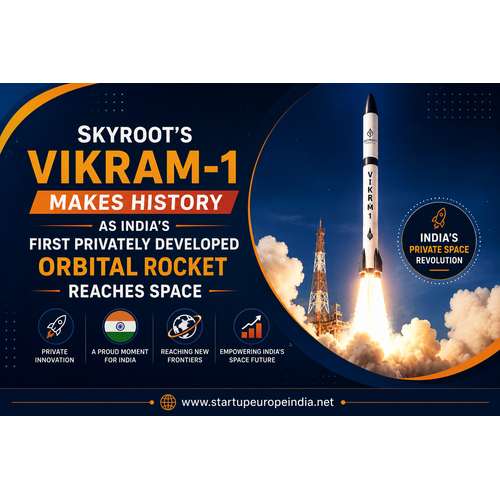
Skyroot's Vikram-1 Makes History as India's First Privately Developed Orbital Rocket Reaches Space

Sat, Jul 18, 2026
Skyroot's Vikram-1 Makes History as India's First Privately Developed Orbital Rocket Reaches Space
Sarah   J

Sarah J

Fri, Jul 17, 2026

India-UK CETA Delivers First US$10 Million Jewellery Export Shipment

Fri, Jul 17, 2026
India-UK CETA Delivers First US$10 Million Jewellery Export Shipment